Fresh-Ground vs Pre-Ground Spices: Does It Really Matter?
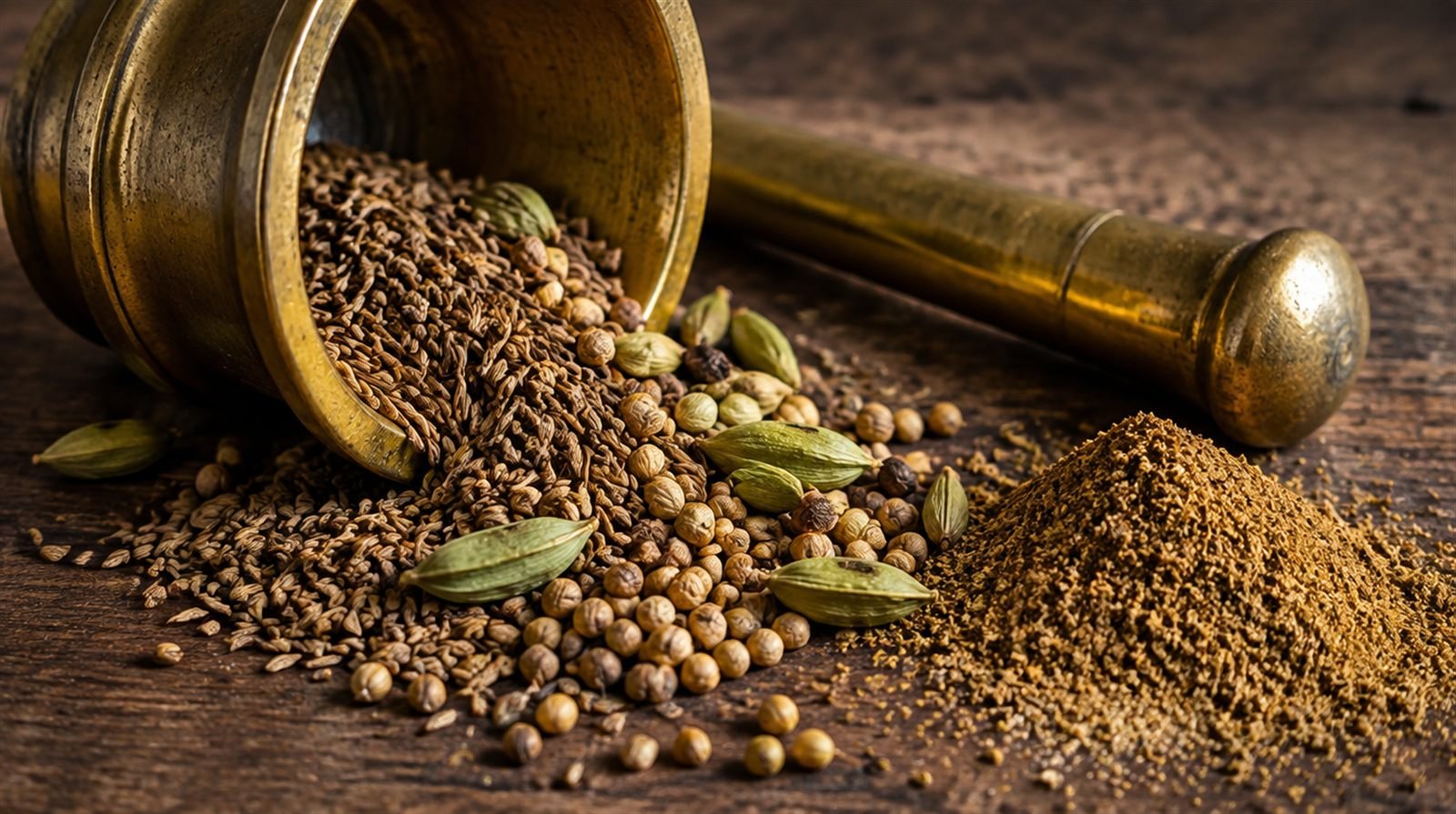
Fresh ground spices vs pre ground spices: fresh ground wins on aroma and flavor, because the aromatic oils that give a spice its character start to fade the moment the seed is cracked open. Pre-ground spices are still useful. They are just at their best for a shorter window, and that window matters more for some spices than others.
We grind our spices in-house in small batches, so this is a question we get asked a lot at the shop. The honest answer is that both have a place in a working kitchen. The trick is knowing which spices are worth grinding yourself and which ones you can buy ground without losing much.
Here is why the difference exists, when it matters, and a simple test you can run at home with two jars and a skillet.
Why do freshly ground spices taste better?
Freshly ground spices taste better because grinding breaks open the cells that hold a spice’s volatile aromatic oils, and those oils begin to evaporate and react with air as soon as they are exposed. A whole cumin seed keeps its oils sealed inside a tough outer coat. A ground cumin seed is thousands of tiny pieces, each with surface open to the air.
The result is simple. Whole spices hold their flavor for a long time. Ground spices smell wonderful on day one and a little less each week after. Heat, light and humidity speed that process up, which is why a jar kept next to the stove fades fastest.
This is a general principle, not a precise number. How fast a spice fades depends on the spice, the grind, the container and where you keep it.
Fresh ground spices vs pre ground: which spices actually matter?
The gap between fresh ground spices vs pre ground is widest for spices with a lot of volatile oil and a hard shell that protects it. Cardamom, cumin, coriander, black pepper, cloves and nutmeg are the clearest examples. For these, grinding at home or buying from a blender who grinds often makes a noticeable difference.
When whole spices are worth it
- Whole cardamom pods keep their floral scent for a long time, while ground cardamom fades quickly. Crack the pods as you need them.
- Cumin seeds toasted in a dry pan and crushed taste deeper and nuttier than any jar of ground cumin.
- Whole coriander has a bright, citrusy aroma that ground coriander loses within months.
- Whole black peppercorns in a grinder are the easiest upgrade any kitchen can make. Pre-ground pepper is mostly heat with little aroma.
When ground is fine
Pre-ground is fine for spices you use in quantity and cook long, like paprika, turmeric and chile powders, which are sold ground anyway. It is also fine for spice blends. A blend like baharat or curry has many components that balance each other, and a good blender grinds and mixes them so they hit the jar at their best.
Ground is also the right call when you cook every day and go through a jar in a month or two. Ground cumin from a blender who grinds in small batches will still be fresh when you finish it. The problem is the jar that sits for three years.
How does Kashat grind its spices?
We grind our spices fresh in-house and hand-mix every blend in small batches at our shop in Madison Heights, Michigan. Small batches mean we grind what we need, not what will sit on a shelf. There are no artificial preservatives or additives in anything we sell.
That approach is the middle path between grinding everything yourself and buying big-brand jars that were ground long before they reached the store. You get the convenience of ground spice with much of the aroma of fresh.
How can you test fresh ground vs pre ground at home?
You can settle fresh ground spices vs pre ground for yourself in five minutes with cumin, a dry skillet and your nose. Here is how.
- Open a jar of pre-ground cumin, hold it a few inches from your nose, and breathe in. Note how strong the smell is.
- Put 1 tablespoon of whole cumin seeds in a dry skillet over medium heat. Shake the pan for 2 to 3 minutes until the seeds darken slightly and smell toasty.
- Pour the seeds onto a plate to cool, then crush them in a mortar, a spice grinder, or under the flat of a heavy pan.
- Smell the fresh grind next to the jar. The difference is usually obvious.
- Season two small bowls of plain yogurt or two pans of rice with each and taste them side by side.
Once you have done this with cumin, try it with coriander and cardamom. Those three will teach you more about spice freshness than any article can.
Whole vs ground spices: a quick comparison
Here is the fresh ground spices vs pre ground question in one table.
| Factor | Whole spices | Ground spices |
|---|---|---|
| Flavor life | Long, oils stay sealed inside | Shorter, oils exposed to air |
| Convenience | Needs grinding or toasting | Ready to use |
| Best for | Cardamom, cumin, coriander, pepper, cloves | Blends, paprika, turmeric, everyday cooking |
| How to use | Toast, then grind, or add whole to stews and rice | Bloom in oil or add directly |
| Buying tip | Buy larger amounts, grind as needed | Buy small amounts from a fresh grinder |
Frequently Asked Questions
Are fresh spices better than old spices?
Yes, fresh spices have more aroma and flavor than old ones, so you use less and the dish tastes brighter. Old spices are not unsafe. They simply lose the volatile oils that make them worth using, and you end up adding more and more for less result. If a jar smells faint when you open it, replace it or plan to double the amount.
Why grind your own spices?
Grinding your own spices gives you the strongest aroma and lets you control the texture, from a coarse crush for a rub to a fine powder for a sauce. It also lets you toast the whole spice first, which adds a nutty depth you cannot get from a jar. The trade-off is time and a grinder. For everyday cooking, buying small amounts of freshly ground spice is a fair compromise.
What is the best way to grind whole spices at home?
A small electric coffee grinder kept only for spices is the fastest and most even option. A mortar and pestle gives you more control and works well for small amounts. For peppercorns, a hand pepper mill is ideal. Whatever tool you use, toast the spices in a dry pan first and let them cool completely, since warm spices clump and smear instead of grinding cleanly.
Do whole spices go bad?
Whole spices do not go bad in the sense of becoming unsafe, but they do slowly lose flavor over years. Kept in a sealed jar away from heat and light, most whole seeds and pods stay useful far longer than their ground versions. Check them by crushing one between your fingers and smelling it. If the aroma is strong, they are fine to use.
Every spice at Kashat is ground fresh in-house and hand-mixed in small batches in Madison Heights, Michigan. Shop whole cumin seeds, whole cardamom and the rest of our singles and blends at the Kashat Spices shop, and run the skillet test yourself.