Private Label Spice Blends: A Guide for Restaurants and Food Brands
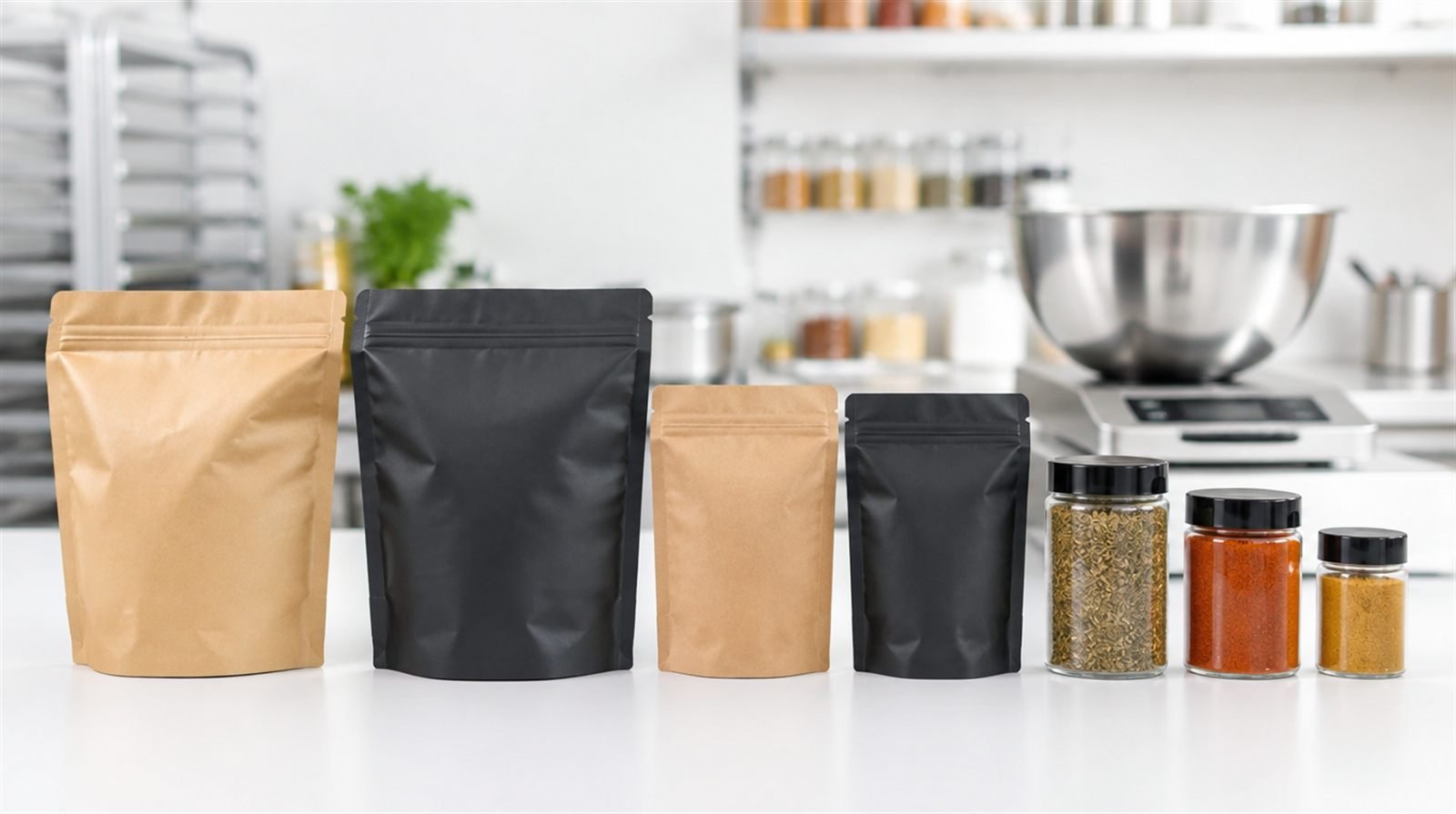
Private label spice blends are seasonings that a spice manufacturer blends and packages under your brand name, so a restaurant, retailer or food company can sell a signature blend without building its own production kitchen. The blender handles sourcing, grinding, mixing and packing. You own the label, the customer relationship and the shelf space.
For a small food business, that is often the fastest route from a house seasoning that customers ask about to a product they can take home.
This guide explains how private label differs from white label and custom blending, who it suits, how the process usually runs, and what to ask before you commit.
What is a private label spice blend?
A private label spice blend is a product made by one company and sold under another company’s name. The blender produces the seasoning, packs it into your chosen jars or pouches and applies your label. To the customer, it is your product.
The blend itself can be one of two things. It can be a blend the manufacturer already makes, packed for you under your name. Or it can be a recipe developed for you alone, which crosses into custom blending. Most private label programs land somewhere between the two, starting from a house blend and adjusting it until it tastes like yours.
Private label vs white label vs custom blend: what is the difference?
The difference is who owns the recipe and whose name goes on the package. Private label puts your name on the package. White label leaves the package plain or generic. A custom blend is a recipe built for you, which can then be sold under either kind of label.
| Option | Whose recipe | Whose label | Typical buyer |
|---|---|---|---|
| Private label | Blender’s house recipe, sometimes adjusted | Yours | Restaurants, retailers, food brands |
| White label | Blender’s house recipe | Plain or generic, no brand | Re-packers, distributors, food service |
| Custom blend | Developed for you | Yours, or blender’s, or plain | Manufacturers, chefs with a signature flavor |
| Wholesale (blender’s label) | Blender’s house recipe | Blender’s brand | Restaurants, markets, kitchens |
Private label is the quickest path to a retail-ready product, because the recipe already exists and has been made many times. White label suits businesses that re-pack the blend themselves or want to test a product before investing in label design. A custom blend takes more rounds of sampling, and the finished recipe is yours to reorder.
Who uses private label spice blends?
Private label spice blends serve four kinds of buyers: restaurants, re-packers, retailers and food manufacturers. Each has a different reason for outsourcing the blend.
- Restaurants that want to sell their house seasoning at the counter or online, or that want the same blend in every location without a cook measuring it by hand.
- Re-packers and distributors that buy in bulk and portion it into their own retail sizes for markets and food service accounts.
- Retailers and markets that want a store-brand line of spices next to the national brands.
- Food manufacturers that need a consistent seasoning for a sauce, snack, sausage or prepared meal, batch after batch.
How does the private label process work?
The process runs from a first conversation, through tasting and adjustment, to labeling and a first production run, and then into a reorder rhythm. The steps below describe how it typically goes, though every blender runs it a little differently.
- Inquiry. You describe the blend you want, how you will use it, the volume you expect and how you want it packed. The more detail, the better the first sample.
- Sample and tasting. The blender sends a sample, or a few options, and you cook with it the way your customers will.
- Adjustment rounds. You give feedback on salt, heat, warmth, color and grind, and the blender revises. Custom blends usually take more rounds than a house blend.
- Packaging and label. You choose the container size and supply label artwork, or agree on plain packaging for white label. The blender confirms the label fits the container.
- First production run. The blend is made, packed and labeled. Check the first batch against your approved sample before it goes on sale.
- Reorders. Once the recipe is locked, reorders repeat the same formula. Agree on how far ahead you need to place them so you never run out.
What should you ask a private label spice manufacturer?
Ask about freshness, consistency, minimums, lead times, labeling and confidentiality before you commit. The answers matter more than the price per pound.
- When is the blend ground and mixed relative to when it ships?
- How do you keep the blend consistent from one batch to the next?
- What are your minimums, and do they change with the container size?
- What lead time do you need for a first run and for reorders?
- Which container sizes do you pack, and can you apply my label?
- Do you use any artificial preservatives, anti-caking agents or fillers?
- Who owns a custom recipe, and will it ever be sold to anyone else?
- Can I get a sample before committing to a run?
A blender who answers those questions plainly, in writing, is one you can build a product line with. One who dodges the recipe ownership question is not.
What does Kashat offer for private label and custom blends?
Kashat Spices offers four options for wholesale buyers: Kashat-label blends, private label, white label and custom unique blends. All of them are ground fresh in-house and hand-mixed in small batches in Madison Heights, Michigan, with no artificial preservatives or additives.
The line started as family recipes perfected over more than 30 years and opened to the public in 2010. It has grown from two blends to a full line of 18 house blends, alongside roughly 60 single spices and herbs. Those house blends are the natural starting point for private label spice blends, and custom blends are developed from the same small-batch process.
Kashat blends are already used by restaurants and food manufacturers in over 10 states. Wholesale and private label are not sold through the online shop. Every program starts with the form on the Kashat wholesale page or an email to randy@kashatspices.com, where you can describe the blend, the volume and the packaging you have in mind.
Frequently Asked Questions
Is there a minimum order for private label spice blends?
Minimums vary from blender to blender and depend on the blend, the packaging and the label work involved, so there is no single number that applies across the industry. Kashat does not publish minimums online. The best approach is to describe your project, your expected volume and your packaging on the wholesale form, and the details are worked out in that conversation rather than from a price list.
Can I keep my recipe confidential with a private label blender?
Yes, a reputable blender treats a customer’s custom recipe as that customer’s property, but you should ask for that in writing before you share a formula. Ask who inside the company sees the recipe, whether the blend will ever be sold to anyone else, and what happens to the formula if you stop ordering. Clear answers to those three questions tell you a lot about the blender.
Do I need to design my own label?
For a private label program, yes, the label carries your brand, so the artwork usually comes from you or your designer. The blender can tell you the pouch or jar sizes they pack and the label dimensions that fit them, and they can flag anything that looks off before printing. For white label, the blender’s own plain packaging is used, so there is no artwork to prepare at all.
What is the difference between private label and wholesale?
Wholesale means buying a blender’s own branded products in bulk to use in your kitchen or resell as they are. Private label means the same kind of product is packed under your brand instead. Kashat offers both: restaurants and food manufacturers can order Kashat-label blends at wholesale, or have blends packed under their own label. Neither is sold through the online shop, so both start with the wholesale form.
Start your private label conversation on the Kashat wholesale page, or email randy@kashatspices.com with the blend you have in mind. Tell us how you will use it and how you want it packed, and we will take it from there in small, hand-mixed batches.