7 Spices That Make Fall Soups and Stews Taste Better
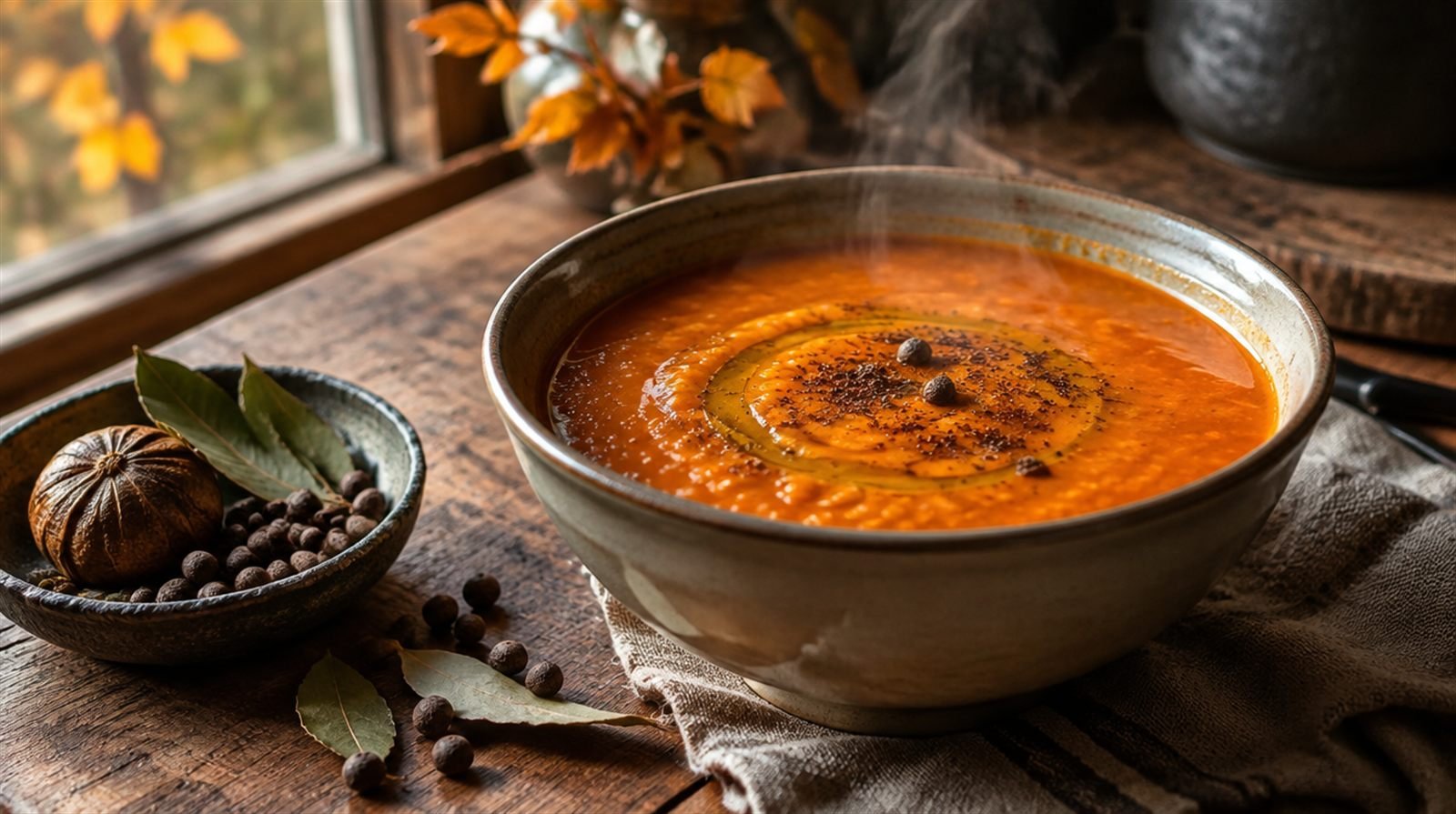
The best spices for soups and stews build flavor in layers: bay leaves, whole allspice and black pepper at the start, cumin and turmeric bloomed in the fat, baharat in the middle, and dried lime at the end for brightness. Add each at the right moment and a plain pot of lentils tastes like it simmered all day.
Fall is when the big pot comes out in our kitchen: lentil soup on weeknights, lamb and bean stew on Sundays, a pot roast when the weather turns. The spices below go into nearly all of them, and the timing is what separates a flat pot from a deep one.
Here are the seven best spices for soups and stews, when to add each, and a simple Iraqi-style lentil soup that uses most of them.
Why does timing matter when you season a soup or stew?
Timing matters because different spices give up their flavor at different speeds. Whole spices are slow and steady, so they go in at the start. Ground spices release fast and can fade or turn muddy over hours, so they go in the middle. Sour and fresh notes are fragile, so they go in at the end.
A simple rule: start with whole, bloom the ground, finish with sour. Follow it and you will rarely need to rescue a pot at the end.
What are the best spices for soups and stews?
These seven cover nearly every fall soup and stew we make, from red lentil to beef and bean. Each entry says when it goes in the pot.
1. Bay leaves (start)
Bay gives a quiet, savory background that you notice most when it is missing. Add two or three Kashat Bay Leaves to the pot with the liquid and let them simmer the whole time. Fish them out before serving.
2. Whole allspice (start)
A few whole allspice berries bring a warm, clove-like note to beef, lamb and tomato-based stews without the sharpness of the ground spice. Add four to six Kashat Allspice Whole berries at the start, or tie them in cheesecloth with the bay so they are easy to remove.
3. Whole black pepper (start)
Whole peppercorns give a long simmer a gentle heat that builds without stinging. Drop eight to ten into the pot at the start. Keep ground black pepper for the table, where its bite is welcome.
4. Cumin (middle, bloomed)
Cumin is the backbone of Iraqi lentil soup and most bean stews. Stir a teaspoon of Kashat Cumin Ground into the hot oil with the onions for thirty seconds before the liquid goes in. That short sizzle turns its raw, dusty edge into something toasted and deep.
5. Turmeric (middle, bloomed)
Turmeric gives lentil and chicken soups their golden color and an earthy base. Bloom half a teaspoon of Kashat Turmeric in the fat alongside the cumin. Added raw to the liquid, it tastes chalky. Bloomed, it disappears into the broth.
6. Baharat 7 Spice (middle)
When a stew needs to taste like a Middle Eastern stew, baharat does it in one spoon. Stir a tablespoon of Kashat Baharat 7 Spice into a beef, lamb or chickpea stew after the meat is browned and before the liquid goes in. It carries the warm spices that would otherwise take five jars.
7. Dried lime (finish)
Dried lime is the Iraqi secret to a soup that tastes bright without tasting like lemon juice. Stir a teaspoon of Kashat Lemon Balls (ground dried lime) into the pot in the last ten minutes. It adds a sour, faintly earthy depth that fresh lemon cannot match, and it stays in the background.
When should you add each spice to the pot?
Add whole spices at the start, ground spices in the middle after blooming, and sour or fresh notes at the finish. The table sums up the seven best spices for soups and stews with a starting amount for each.
| Spice | When to add | Amount per 3 quart pot | Good in |
|---|---|---|---|
| Bay leaves | Start | 2 to 3 leaves | Everything |
| Whole allspice | Start | 4 to 6 berries | Beef, lamb, tomato stews |
| Whole black pepper | Start | 8 to 10 peppercorns | Broths, bean stews |
| Cumin | Middle, bloomed in fat | 1 teaspoon | Lentils, beans, chicken |
| Turmeric | Middle, bloomed in fat | 1/2 teaspoon | Lentils, chicken, rice soups |
| Baharat 7 Spice | Middle, after browning | 1 tablespoon | Beef, lamb, chickpea stews |
| Dried lime | Finish | 1 teaspoon ground | Lentils, chicken, lamb |
These amounts are starting points for a pot that serves four to six. Taste before you add more, and remember that salt does as much for a bland pot as any spice.
How do you make a simple Iraqi-style lentil soup?
Iraqi red lentil soup, shorbat adas, is the easiest way to see these spices work together. It takes one pot and about 40 minutes.
- Soften one chopped onion in three tablespoons of oil or butter over medium heat until golden.
- Stir in a teaspoon of ground cumin and half a teaspoon of turmeric. Cook for thirty seconds until fragrant.
- Add one and a half cups of rinsed red lentils, six cups of water or stock, two bay leaves and a teaspoon of salt.
- Bring to a boil, then simmer uncovered for 25 to 30 minutes, stirring now and then, until the lentils collapse.
- Remove the bay leaves. Blend the soup smooth, or leave it rustic.
- Stir in a teaspoon of ground dried lime and the juice of half a lemon. Taste for salt.
- Serve with a drizzle of olive oil, a pinch of cumin on top and warm bread.
For a heartier pot that uses the same layering with beef, our Slow Cooker Pot Roast recipe starts with whole spices and finishes bright the same way.
Frequently Asked Questions
Should I add spices at the beginning or the end of a soup?
Both, depending on the spice. Whole spices such as bay leaves, allspice berries and peppercorns go in at the beginning, because they release flavor slowly over a long simmer. Ground spices such as cumin and turmeric go in the middle, bloomed in the fat before the liquid is added. Sour and fresh notes such as dried lime, lemon juice and chopped herbs go in at the end so they stay bright.
How much spice should I use in a pot of soup?
For a pot that serves four to six, start with about a teaspoon of each ground spice, a tablespoon of a blend like baharat, and a small handful of whole spices. Taste after the pot has simmered for twenty minutes, then adjust. It is easy to add more and impossible to take it out. Salt matters as much as any spice, so check that before you add anything else.
Can I use ground allspice instead of whole in a stew?
Yes, but use less and add it later. A quarter teaspoon of ground allspice replaces about five whole berries. Whole berries can simmer for hours and stay gentle, while ground allspice releases its flavor fast and can turn sharp if it cooks too long. Stir ground allspice in with the other ground spices after the onions are soft, rather than at the very start with the liquid.
Why does my soup taste flat?
Flat soup is usually missing salt, acid or a bloomed spice, in that order. Check salt first, since under-salted soup tastes dull no matter what else is in it. Then add something sour: a teaspoon of ground dried lime or a squeeze of lemon wakes up the whole pot. If it is still flat, sizzle a little cumin or baharat in oil for thirty seconds and stir it in.
Get the two that do the most work, Kashat Baharat 7 Spice and Kashat Lemon Balls, and your fall pots will taste different this week. Shop the rest of the best spices for soups and stews at the Kashat Spices shop.