Cardamom Guide: Whole vs Ground and How to Use It
The simplest way to use cardamom is to crush a few whole green pods and let them simmer in tea, coffee, rice or a stew, or to add a small pinch of ground cardamom to baking and spice blends. Learning how to use cardamom comes down to two choices: whole or ground, and how much.
Cardamom is one of the most expensive spices by weight and one of the strongest, so a little goes a long way. Used with a light hand it tastes floral, sweet and faintly like eucalyptus. Used with a heavy hand it tastes like soap.
In an Iraqi kitchen it shows up in the tea glass, the coffee pot, the rice, and the holiday cookies. Here is what cardamom is, how whole and ground compare, and how much to use in each dish.
What is cardamom?
Cardamom is the dried seed pod of a plant in the ginger family, grown mainly in southern India and Guatemala. Each small pod holds a cluster of dark, sticky seeds, and those seeds carry almost all of the flavor. The pale husk is mostly there to protect them.
The flavor has several sides. It is sweet and floral, it has a cool, almost minty edge, and underneath there is a warm citrus note. That range is why it works in both a lamb stew and a date cookie.
Green cardamom vs black cardamom
Green cardamom is the everyday kind, and it is the one we sell. The pods are small and pale green, and the flavor is bright, sweet and floral.
Black cardamom is a different plant, with large, dark, wrinkled pods dried over fire, so it tastes smoky and rough. It belongs in savory Indian braises, not in a recipe that calls for green.
Cardamom whole vs ground: which should you buy?
Buy whole pods for drinks, rice and stews, and buy ground cardamom for baking and spice blends. If you can only keep one, choose whole, because the pod protects the seeds and the aroma holds far longer on the shelf.
Ground cardamom is convenient, but the fine powder loses its aroma faster than most ground spices once the jar is open. We grind Kashat Cardamom Ground in small batches in our own shop so it reaches you fresh, and for the fullest flavor we suggest using it within a few months of opening. Kashat Cardamom Whole, stored airtight and away from heat, stays fragrant for a year or more.
| Whole pods | Ground cardamom | |
|---|---|---|
| Aroma | Strongest, released when the pod is crushed | Strong at first, fades after opening |
| Shelf life | Long, because the husk protects the seeds | Shorter, use within months of opening for best flavor |
| Best for | Tea, coffee, rice, stews, braises, pickles | Cookies, cakes, kleicha, spice blends, coffee |
| How to use | Crush lightly, simmer, remove before serving | Stir into dough or batter, or bloom briefly in fat |
| Amount | 3 to 5 pods per pot of rice or tea | 1/4 to 1 teaspoon per recipe |
How to grind cardamom at home
- Press each pod with the flat of a knife until it splits.
- Pick out the dark seeds. Save the husks for the tea pot, where they still give a little aroma.
- Grind the seeds in a mortar or a spice grinder. In a mortar, a pinch of sugar helps break the sticky seeds down.
How do you use cardamom in tea and coffee?
Crush a few whole pods into the pot for tea, and stir a pinch of ground cardamom into the grounds for coffee. Drinks are where cardamom is most at home in the Middle East, and if you are wondering how to use cardamom beyond dessert, start here.
Cardamom tea
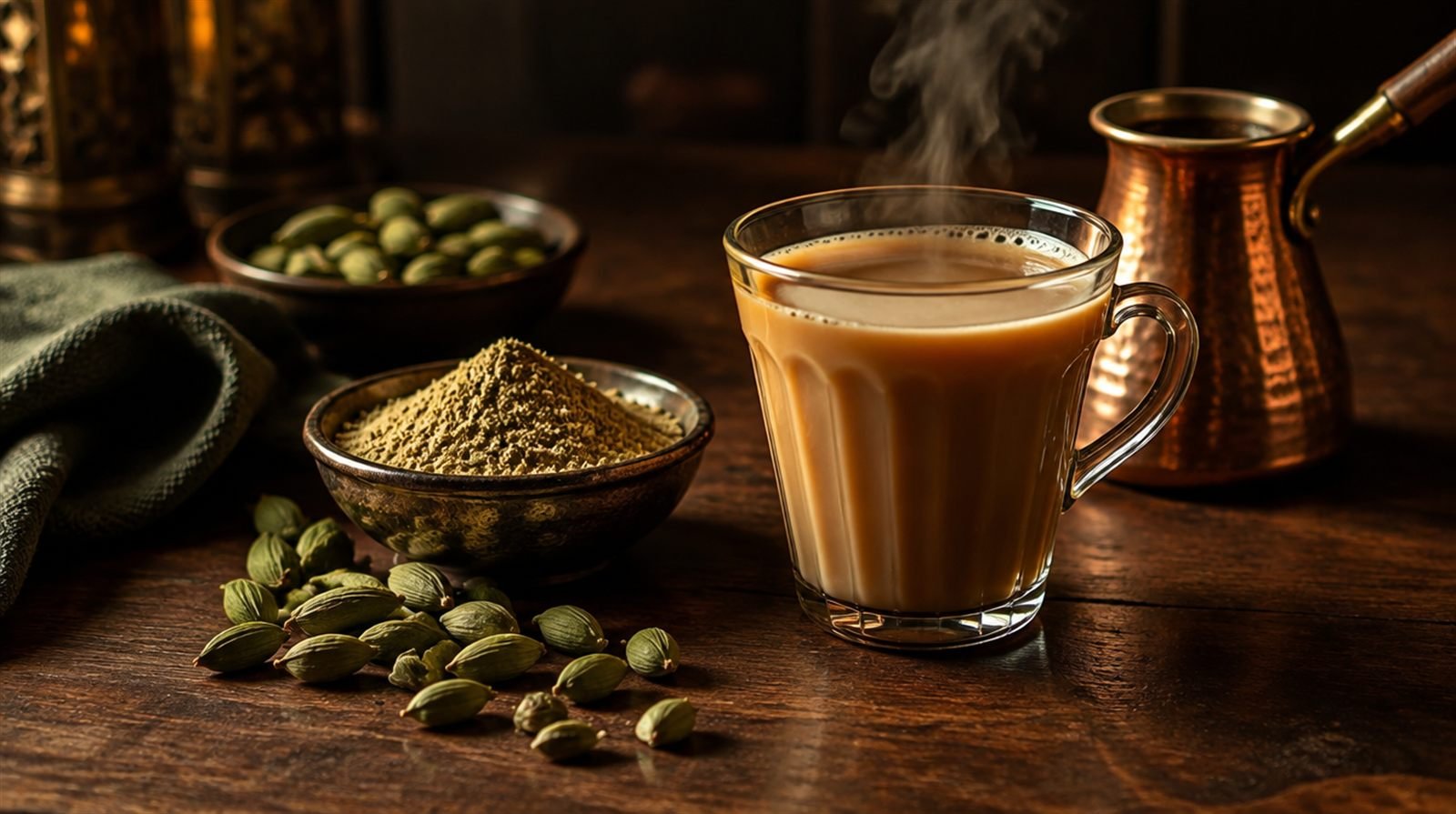
Iraqi tea, chai and other spiced black teas all lean on cardamom. Crush 3 or 4 green pods, drop them into the kettle with loose black tea and a Kashat Cinnamon Stick, and simmer for a few minutes before pouring. The husks stay in the pot, not the glass.
Cardamom coffee
Arabic coffee and Turkish coffee both use cardamom. For Turkish-style coffee, add a pinch of ground cardamom to the grounds in the pot before the water goes in. For Arabic coffee, crushed whole pods simmer with the lightly roasted beans, and some households wedge a pod into the spout of the pot so every pour passes over it.
How to use cardamom in cooking and baking
Whole pods go into rice and stews at the start, and ground cardamom goes into doughs, batters and blends. The rule is the same in both cases: keep it in the background, where people notice it but cannot quite name it.
Rice
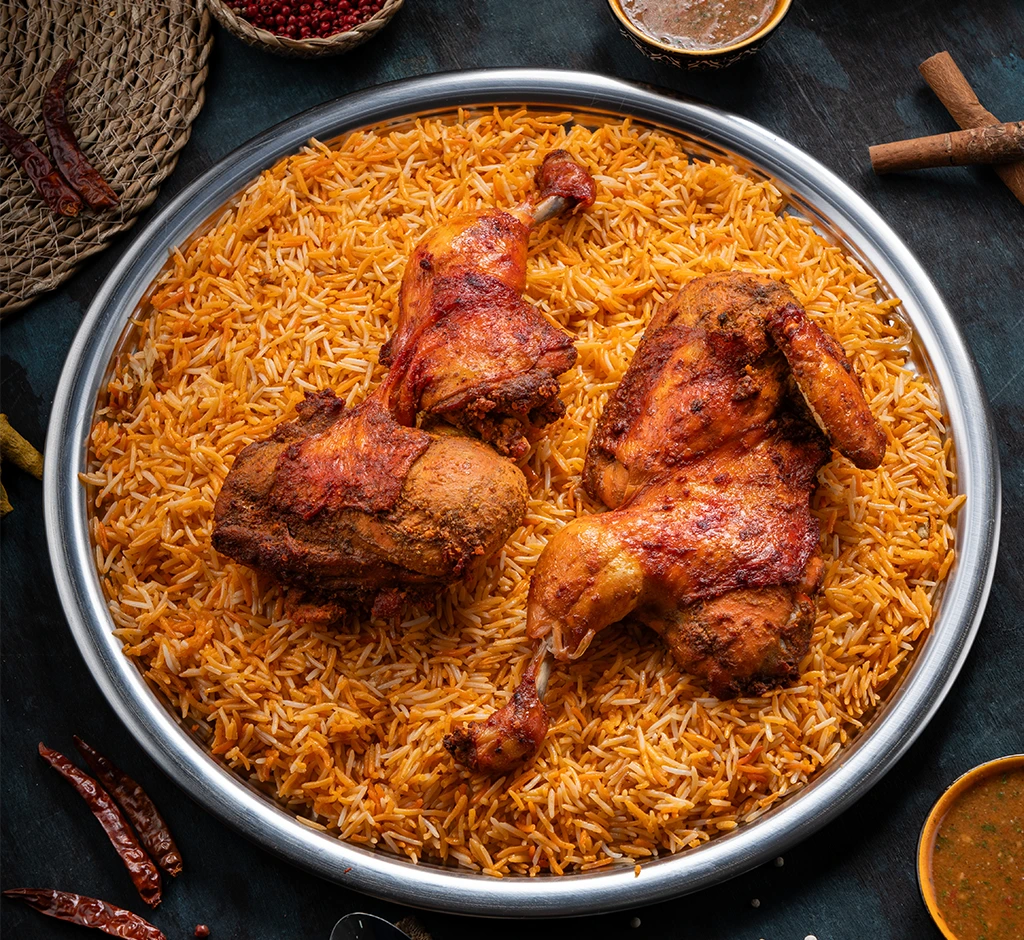
Add 3 or 4 lightly crushed whole pods to the pot with a cinnamon stick and a few Kashat Cloves Whole when the water goes in. The rice absorbs the perfume as it steams. Pull the pods out before serving, or warn your guests. This is the base of quzi rice.
Kleicha and other baking
Ground cardamom is the traditional spice in kleicha, the Iraqi date cookie, and it belongs in sweet breads, shortbread, rice pudding and cakes. Start with half a teaspoon per batch of cookie dough and work up from there. It pairs well with rosewater and dried Kashat Rosebuds, and with dates, orange, pistachio and coffee.
Stews and meat
Whole pods go into lamb and chicken stews at the start of cooking, along with cloves, cinnamon, dried lime and black pepper. Ground cardamom is also a typical component of baharat and of the spice mix on koozi lamb. In savory dishes, one or two pods per pot is plenty.
How much cardamom should you use?
Start with one pod per cup of liquid, or a quarter teaspoon of ground cardamom per four servings, then taste and adjust. Cardamom is easy to add and impossible to take back, so the last part of how to use cardamom well is restraint.
- Tea or coffee: 1 pod per cup, or a small pinch of ground per cup.
- Rice: 3 to 5 pods per 2 cups of dry rice.
- Stews: 1 to 2 pods per pot, removed before serving.
- Cookies and cakes: 1/2 to 1 teaspoon ground per batch.
Frequently Asked Questions
Do you eat the cardamom pod?
No, the husk is edible but tough and papery, so most cooks fish the pods out before serving or leave them for guests to push aside. The seeds inside carry the flavor. If you want no pods in the finished dish, crack them open, use only the seeds, and either grind them or tie them in a small piece of cheesecloth that you can lift out.
How much ground cardamom equals one pod?
A rough rule is that 10 pods give about 1 1/2 teaspoons of ground cardamom, so one pod is a little less than a sixth of a teaspoon. Pods vary in size, so treat this as a starting point. Ground cardamom also tastes stronger at first than a whole pod simmering in liquid, so use slightly less ground than the math suggests and taste as you go.
Why does my cardamom taste soapy?
Almost always because there is too much of it. The floral, cooling side of cardamom turns soapy when it dominates a dish, especially in ground form. Cut the amount in half next time and add it earlier so it cooks in with the other flavors. If it still bothers you in small amounts, switch to whole pods and remove them before serving, which gives a gentler result.
Can you substitute ground cardamom for whole pods?
Yes, use about a quarter teaspoon of ground cardamom for every three or four pods, and add it later in cooking than you would add the pods. Ground cardamom releases its flavor almost instantly, so it can go in with the other ground spices or near the end. Whole pods need simmering time. The reverse swap also works as long as you crush the pods well first.
Now that you know how to use cardamom, get Kashat Cardamom Whole for the tea pot and the rice pot, and Kashat Cardamom Ground for cookies and blends, both packed fresh in Madison Heights. Shop the two side by side and see which one your kitchen reaches for more.