How to Store Spices So They Stay Fresh Longer
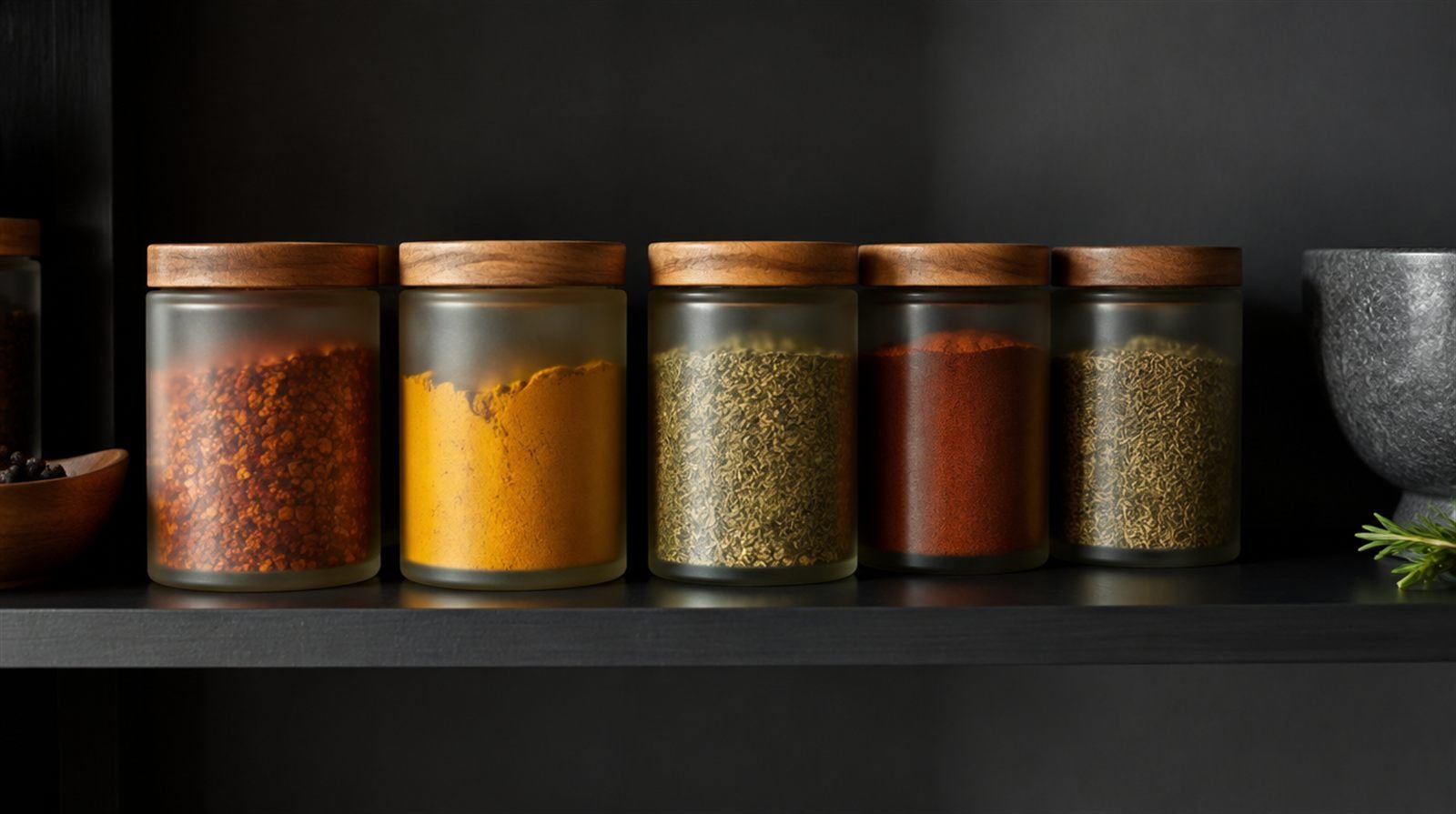
How to store spices comes down to four things: keep them sealed, cool, dark and dry, and away from the stove and the sink. Heat, light, air and moisture all wear down the aromatic oils that give a spice its flavor. Block those four and most spices stay lively for far longer than you might expect.
We grind and hand-mix our blends in small batches in Madison Heights, Michigan, and the question we hear most often is about spice storage. People want to know why the jar they bought last year already smells like dust.
The jar was probably fine. The spot it sat in was the problem. This guide covers how to store spices day to day, where to store spices in the kitchen, whole versus ground, the freezer question, and what to do with a spice that has lost its edge.
How to store spices step by step
Store spices in a sealed container, inside a closed cupboard or drawer, in a part of the kitchen that stays at room temperature or cooler. That rules out the shelf above the range and the sunny windowsill, the two most common spots we see.
- Pick a spot away from heat. Choose a cupboard or drawer that is not next to the stove, oven, dishwasher or a sunny window.
- Use airtight containers. Glass jars with a tight lid or metal tins with a snug seal both work. If a spice comes in a bag, press the air out or move it to a jar.
- Keep spices out of the light. Clear jars are fine behind a cupboard door. Light fades color first and flavor soon after.
- Measure with a dry spoon. Never shake a jar over a steaming pot. Steam rises into the jar and clumps the spice.
- Buy what you will use. A small jar you finish in a few months beats a big one that sits for years.
- Label and date. Write the month you opened it on the lid. It ends the guessing later.
What are the four enemies of spices?
Heat, light, air and moisture are the four things that shorten a spice’s life. Each one attacks the volatile oils that carry aroma and taste. A jar on a bright shelf above the stove is getting hit by three at once.
Heat
Warmth speeds up the loss of aromatic oils and turns fatty seeds like sesame and poppy rancid sooner. Keep spices out of the heat zone around the range and off the top of the refrigerator, which gives off warmth from the back.
Light
Sunlight and strong kitchen lighting bleach color and dull flavor. Paprika, sumac and dried herbs show it fastest, turning from bright to brownish. A closed cupboard or an opaque tin solves this.
Air
Every time a jar is open, oxygen gets in and aroma gets out. Smaller jars, tight lids and a quick hand on the cap all help.
Moisture
Humidity clumps ground spices and can lead to mold. The usual sources are steam from the stove, a wet measuring spoon, or a cupboard beside the dishwasher vent. If a spice does clump, break it up and use it soon.
Should whole spices and ground spices be stored differently?
Whole spices and ground spices need the same conditions, but whole spices forgive far more. The outer shell of a seed or pod protects the oils inside, so a whole spice holds its character for years, while a ground spice starts fading the day it is milled.
That is why we keep whole spices like Kashat Cardamom Whole and Kashat Cloves Whole in the pantry for slow-cooked rice and stews, and grind them only as needed. Kashat Cinnamon Sticks stay fragrant in a sealed jar long after ground cinnamon has gone quiet.
| Storage question | Whole spices | Ground spices |
|---|---|---|
| Container | Any airtight jar or tin | Airtight, and as small as practical |
| Sensitivity to air | Low, the shell protects the oils | High, every opening costs aroma |
| Sensitivity to moisture | Low, but avoid steam | High, clumps and cakes easily |
| Buying strategy | Buy larger amounts, grind as needed | Buy small amounts, use within months |
| Best spot | Cool, dark pantry shelf | Cool, dark drawer near the prep area |
Can you store spices in the freezer?
You can freeze spices, but for most home kitchens it is not worth the trouble. Cold slows the loss of aroma, but the catch is condensation. Every time you pull a cold jar out and open it, moisture from the room air settles on the spice.
The freezer makes sense in two cases: a large bag of ground spice or chili you will not finish for months, and fatty seeds like sesame or poppy. Split the spice into small portions, seal each one, and take out one at a time.
For everyday spices, skip the freezer and the refrigerator, which is humid and causes the same condensation. When people ask us how to store spices, the honest answer is that a dark cupboard is simpler and it works.
How do you know if a spice has faded?
A spice has faded when it no longer smells like much. Your nose is a better judge than any date on a label.
- Look. Fresh ground spices have deep, even color. Faded ones look pale, gray or brownish.
- Rub. Crush a pinch between your fingers or in your palm to warm it and release the oils.
- Smell. If the aroma is strong and clear, it is fine. If you have to search for it, it is tired.
What to do with tired spices
Tired spices are weak, not unsafe, so you do not have to throw them out. Use more than the recipe calls for, sometimes double. Bloom them in hot oil at the start of cooking to wake up whatever oils remain, and put them into long braises, marinades and rubs. Save your freshest jars for finishing dishes.
When a spice has no scent at all even after rubbing, replace it. Knowing how to store spices only helps if there is flavor left to protect.
Frequently Asked Questions
Where is the best place to store spices in the kitchen?
The best place is a closed cupboard or drawer away from the stove, oven, dishwasher and any sunny window. A pantry shelf or a drawer beside your cutting board keeps spices cool, dark and within reach. Avoid the cabinet directly above the range, which gets the most heat and steam in the whole kitchen, and skip open spice racks on the counter unless the jars are opaque.
Do spices need to be stored in airtight containers?
Yes, airtight containers are the single most useful step in spice storage. A tight seal keeps air and humidity out, which protects the aromatic oils and stops ground spices from clumping. Glass jars with gasket lids, metal tins and well-sealed resealable bags all work. What matters is that the lid closes fully and that you close it right after measuring, not at the end of cooking.
Is it better to store spices in glass or plastic?
Glass is the better choice for most spices because it does not absorb odors or oils and it seals tightly. Plastic can pick up the smell of strong spices like cumin or curry and pass it on to the next thing you store in it. If you do use plastic, choose a thick, opaque container with a good lid and keep it out of the light. Either way, the cupboard matters more than the material.
How do you keep spices fresh in a humid climate?
In a humid kitchen, focus on moisture first. Store spices in small glass jars with tight lids, keep them in a closed cupboard away from the sink and dishwasher, and always measure with a dry spoon. Buy ground spices in small amounts so they do not sit for long. If clumping is a constant problem, a food-safe desiccant packet in the cupboard, not in the jar, can help keep the air drier.
Good storage protects flavor, but it starts with a fresh spice in the first place. Shop Kashat Cardamom Whole, Kashat Cloves Whole and the rest of our whole spices and hand-mixed blends at the Kashat Spices shop. Orders ship in 1 to 3 business days.