The Middle Eastern Spice Pantry: 15 Essentials to Start With
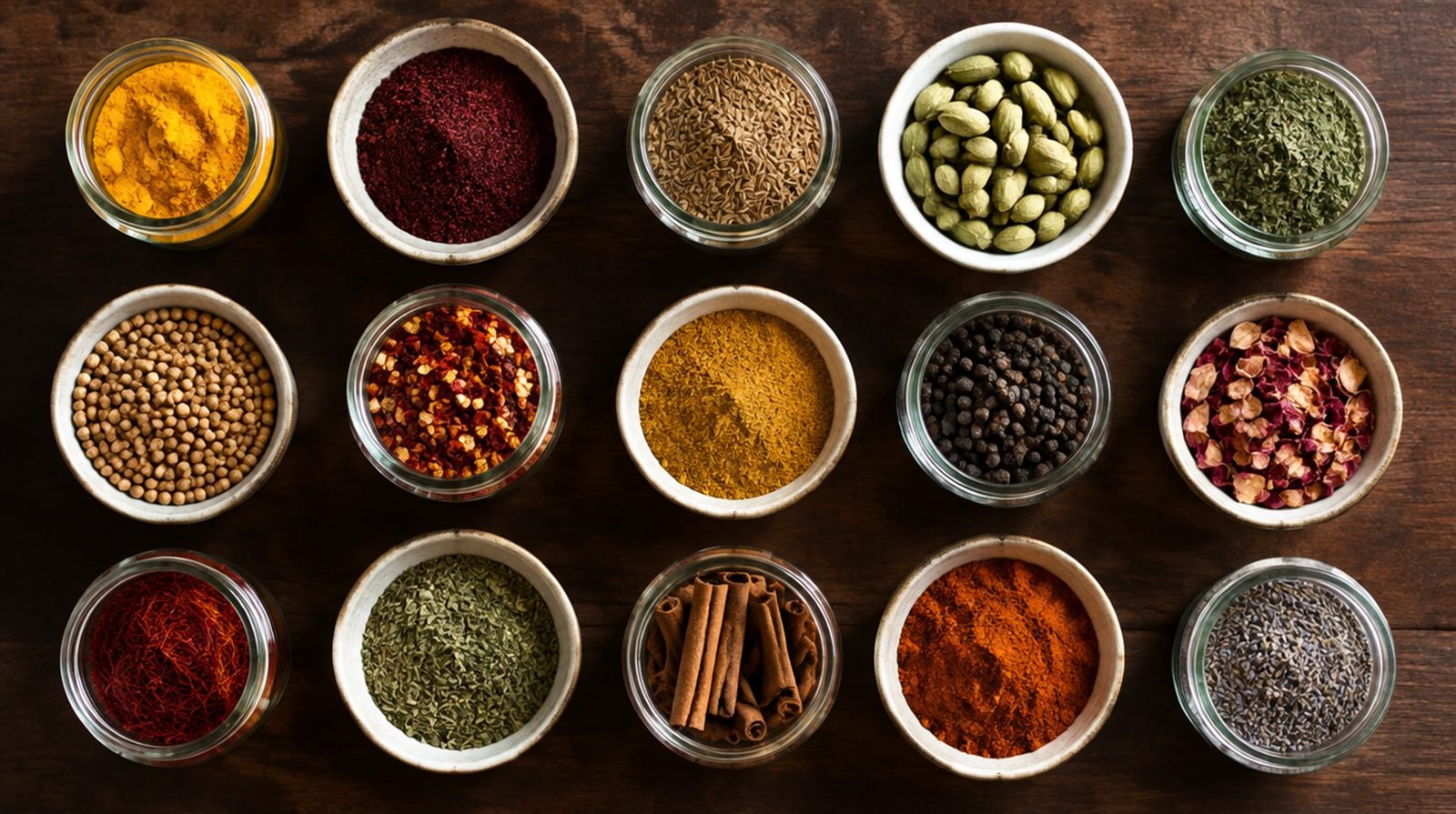
A good Middle Eastern spices list starts with a handful of blends and single spices that show up in dish after dish: baharat, sumac, cumin, coriander, cardamom, turmeric, cinnamon, allspice, dried lime, black seed, dried mint, paprika, cloves, black pepper and a mild curry. With those fifteen in the cupboard you can cook most of the region’s everyday food.
Our family has cooked Iraqi and Middle Eastern food for decades, and we have blended spices for the public since 2010. These are the fifteen jars we would hand a new cook first, grouped into blends, single spices and herbs.
Each one gets a quick note on flavor and what it is for. At the end there is a five-jar starter list if you want to begin small.
Which spice blends should a Middle Eastern pantry have?
Two blends cover the most ground on any Middle Eastern spices list: an all-purpose 7 spice and a mild curry. They save you from measuring six jars every time you cook.
1. Baharat 7 Spice
Warm, peppery and gently sweet, built on allspice, black pepper, cinnamon, cloves, cardamom, nutmeg and coriander. Use it on kofta, kabobs, rice, stews and burgers. If you buy one blend, buy Kashat Baharat 7 Spice.
2. Curry Mild
Iraqi-style curry is gentler and rounder than most Indian curry powders, with turmeric, coriander and warm spices in the lead. Kashat Curry Mild goes into chicken curry, potato and pea stew, and lentil soup without adding much heat.
What single spices belong on a Middle Eastern spices list?
These twelve single spices are the building blocks of the essential Middle Eastern pantry. Most are sold whole or ground, and the notes below say which form to start with.
3. Sumac
Tart, lemony and deep red. Sprinkle Ground Sumac on salads, onions, grilled chicken, hummus and eggs. It is the sour note in fattoush.
4. Cumin
Earthy and warm. Ground Cumin goes into falafel, hummus, lentils, kabobs and nearly every stew. It is the single spice we would never run out of.
5. Coriander
Mild, citrusy and a little sweet. Ground Coriander pairs with cumin in almost everything and softens the sharper spices around it.
6. Cardamom
Floral and fragrant. Whole Cardamom pods go into rice, tea, coffee and stews, and they keep their aroma far longer than ground. Crack a few pods as you need them.
7. Turmeric
Earthy, slightly bitter, and the source of the golden color in rice, soups and curries. Warm Turmeric in hot oil for a few seconds before adding liquid so it does not taste chalky.
8. Cinnamon
Sweet and warm, used in savory food as much as in sweets. Drop a Cinnamon Stick into rice, lamb stew or the dolma pot and pull it out before serving.
9. Allspice
Tastes like cinnamon, clove and nutmeg in one berry. Ground Allspice is the backbone of baharat and belongs in kofta, stuffed vegetables and tomato sauces.
10. Dried lime (Lemon Balls)
Sour, earthy and a little smoky. We sell ground dried lime as Lemon Balls. Stir a teaspoon into bean stews, soups, koozi rice or tea for a deep sourness that lemon juice cannot match.
11. Black seed (nigella)
Slightly bitter, oniony and peppery. Black Seeds go on top of samoon bread, into cheese and pickles, and over rice. A little goes a long way.
12. Paprika
Sweet pepper flavor and red color. Paprika shows up in shawarma marinades, kabob rubs and roasted vegetables.
13. Cloves
Strong, sharp and sweet. Use Whole Cloves sparingly in rice, tea and braised meat. Two or three per pot is plenty.
14. Black pepper
Whole peppercorns in a grinder are the easiest upgrade in any kitchen. Whole Black Pepper keeps its bite far longer than pre-ground.
Which dried herbs belong in a Middle Eastern pantry?
One dried herb earns a place on a short list, and it is the one most American pantries skip.
15. Dried mint
Cool, sharp and grassy. Dried Mint goes into yogurt sauces, dolma, lentil soup, kubba hamudh and salads. In Iraqi cooking it is used more often than fresh mint, and it tastes different, so keep both.
Which five spices should you buy first?
If you are starting from nothing, buy these five from the Middle Eastern spices list above and add the rest as recipes call for them.
- Baharat 7 Spice, because it replaces six jars on its own.
- Ground cumin, because it is in almost every savory dish.
- Ground sumac, for salads, onions and grilled meat.
- Whole cardamom, for rice and tea.
- Dried mint, for yogurt sauces and soups.
With those five, plus salt, garlic and lemon, you can make fattoush, kofta, spiced rice, lentil soup and a yogurt sauce without buying anything else.
Frequently Asked Questions
What are the most common spices in Middle Eastern food?
Cumin, coriander, allspice, cinnamon, black pepper, cardamom, sumac and turmeric are the most common spices across Middle Eastern cooking. Blends like baharat and 7 spice combine several of them. Iraqi food also leans on dried lime and dried mint more than most of its neighbors. Which spices lead depends on the country, but those eight appear in nearly every kitchen.
What is the difference between Middle Eastern and Arabic spices?
There is no real difference in the spices themselves, since Arabic spices are Middle Eastern spices. The term Arabic usually points to the Arabic-speaking countries, while Middle Eastern also covers Turkish, Persian and Kurdish cooking, which share most of the same jars. Baharat, sumac, cumin and cardamom are common to all of them. The blends and the ratios are what change from one kitchen to the next.
Should I buy whole or ground spices for a starter pantry?
Buy ground for the spices you will use often and whole for the ones that fade fast. Ground cumin, coriander, sumac and allspice are fine because you will go through them. Buy cardamom, cloves and black pepper whole, since their aroma disappears quickly once ground. Cinnamon sticks are worth having for rice and stews, and ground cinnamon for baking and blends.
How should I store a Middle Eastern spice pantry?
Store spices in airtight jars in a cool, dark cupboard away from the stove and the dishwasher. Heat, light, air and moisture all fade spices, and the cabinet above the range is the worst spot in the kitchen. Buy small amounts you will finish in a few months rather than big containers that sit for years. Whole spices last longer than ground, so grind as you go.
Every jar on this list is ground fresh in-house and hand-mixed in small batches at Kashat Spices in Madison Heights, Michigan, with no artificial preservatives or additives. Shop the full line of 18 house blends and about 60 single spices and herbs at the Kashat Spices shop. Orders ship in 1 to 3 business days.