Black Seed (Nigella Sativa): What It Is and How to Cook With It
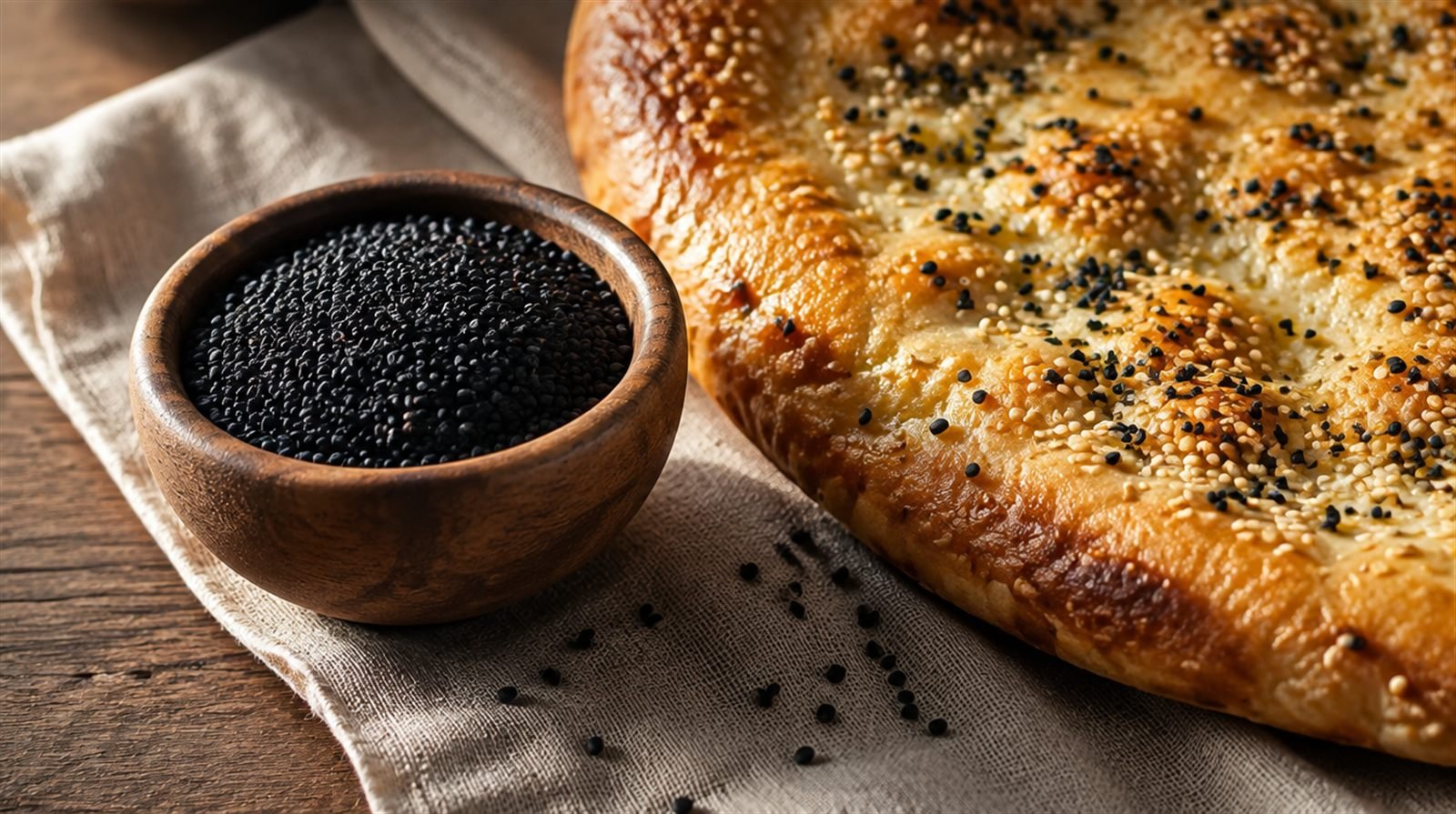
Black seed nigella sativa is a small, matte black seed with a slightly bitter, oniony, peppery flavor, used across the Middle East and South Asia to top breads, season cheese and pickles, and finish rice and eggs. It is often mislabeled as black cumin, but black seed, or nigella, is its own spice with its own taste.
In Iraqi and Chaldean kitchens, these seeds are the black flecks on top of samoon bread and the specks running through braided string cheese. They have a long history in traditional use, but this guide stays in the kitchen, where the seed does its best work.
Here is what black seed tastes like, the names it hides under, and the everyday ways we cook with it.
What is black seed nigella sativa?
Black seed is the dried seed of Nigella sativa, a small flowering plant in the buttercup family that is grown across the Middle East, North Africa and South Asia. The seeds are tiny, angular and deep black, with a dull rather than glossy surface.
They are sold whole, and they are almost always used whole, because they are small enough to eat without grinding.
At Kashat we sell them as Kashat Black Seeds (Nigella), packed whole so the seed keeps its flavor until you cook with it.
What are the other names for black seed?
Black seed nigella goes by more names than almost any other spice, which is why shoppers so often bring home the wrong jar:
- Nigella or nigella seeds, the name most cookbooks use.
- Kalonji, the Hindi and Urdu name used across South Asia.
- Habbat al barakah, Arabic for “seed of blessing,” the name you will hear in Iraqi and Gulf households.
- Black caraway or black onion seed, both misleading, since the seed is neither caraway nor onion.
- Black cumin, the most common mislabel. True black cumin is a different plant with a cumin-like flavor.
If the seeds in the jar are small, coal black and shaped like tiny chips of flint, you have nigella. If they look like slim, dark cumin seeds, you have black cumin instead.
What does black seed taste like?
Black seed tastes slightly bitter and oniony, with a peppery edge and a faint note that reminds many people of oregano or thyme. It is savory, not sweet, and it brings no heat.
Raw, the flavor is sharp and a little harsh. A brief toast in a dry pan, or a few minutes in a hot oven on top of bread, softens the bitterness and brings out a nutty, almost smoky side. That is why it is so often baked on rather than stirred in.
Because the flavor is strong, a little goes a long way. A teaspoon over a whole loaf or a pinch through a pot of rice is usually enough.
How do you use nigella seeds in cooking?
Nigella seeds work best as a finishing seed on breads and dairy, as a seasoning inside pickles and rice, and as a quick garnish on eggs and salads. These are the uses we come back to most.
Breads and samoon
This is the classic use. Brush the shaped dough with water or egg, scatter nigella seeds over the top and bake. Iraqi samoon, Turkish pide, Indian naan and plain flatbread all take it well. Mix nigella with sesame and Kashat Poppy Seeds for a three-seed topping on rolls and bagels.
Cheese
Middle Eastern string cheese and many fresh white cheeses are threaded with black seed. At home, press a pinch into the top of a block of feta or fresh cheese before serving, or stir the seeds into labneh with olive oil for a simple dip.
Pickles
Nigella belongs in the brine. Add a teaspoon to a jar of quick pickled turnips, cucumbers or mixed vegetables along with your other whole spices. It gives the brine a savory, slightly bitter depth that balances the vinegar.
Rice
Sizzle nigella seeds briefly in the oil or butter at the start of a rice dish, right alongside Kashat Cumin Seeds. Then add the rinsed rice and water. The seeds stay whole and dot the finished rice with small bursts of flavor.
Salads and vegetables
Sprinkle raw or lightly toasted seeds over cucumber and tomato salads, roasted carrots, squash or cauliflower. They add crunch and a savory bite without any extra salt.
Eggs
Fried or scrambled eggs take a pinch of nigella well. Add it to the hot oil for a few seconds before the eggs go in, or scatter it on top with a little salt at the table.
Tea
In some Middle Eastern homes, a small pinch of black seed nigella is steeped with black tea or added to a glass of hot water. It gives a faint peppery, herbal note. Treat it as a flavor, not a remedy, and use only a pinch.
How do you toast and store black seed?
Toast black seed in a dry skillet over medium heat for one to two minutes, shaking the pan, until it smells nutty. Pull it off the heat right away, since the small seeds burn fast.
- Heat a dry skillet over medium heat.
- Add a tablespoon of seeds and shake the pan constantly.
- Remove after one to two minutes, as soon as the aroma turns nutty.
- Tip the seeds onto a plate to cool so they stop cooking.
Store the whole seeds in an airtight jar away from heat, light and the steam of the stove. Whole nigella keeps its flavor far longer than any ground spice, so there is no need to buy more than you will use in a year.
How is black seed different from lookalike seeds?
Black seed nigella is the only one of these seeds that tastes oniony and bitter, and the only one that is angular and matte. Here is how to tell the lookalikes apart.
| Seed | Look | Flavor | Best use |
|---|---|---|---|
| Black seed (nigella) | Tiny, angular, matte black | Bitter, oniony, peppery | Bread tops, cheese, pickles |
| Black cumin | Slim, curved, dark brown | Earthy, smoky, cumin-like | Rice, meat rubs |
| Poppy seeds | Round, very small, blue-gray | Mild, nutty | Baking, bagel tops |
| Cumin seeds | Oblong, ridged, tan | Warm, earthy | Rice, stews, spice blends |
Frequently Asked Questions
Is black seed the same as black cumin?
No, black seed (nigella sativa) and true black cumin are different plants with different flavors. Nigella seeds are tiny, angular and matte black, with a bitter, oniony, peppery taste. True black cumin seeds are slim, curved and dark brown, and they taste earthy and smoky like regular cumin. Many jars labeled black cumin actually contain nigella, so check the shape of the seed before you buy.
Do you need to grind nigella seeds before using them?
No, nigella seeds are almost always used whole. They are small enough to eat as they are, and grinding them releases a harsher bitterness than most dishes want. The usual approach is to scatter them on bread before baking, stir them into pickles or rice, or sizzle them briefly in oil. A quick dry toast is the only preparation most recipes call for.
What can I substitute for nigella seeds?
There is no exact match, but a few swaps come close depending on the job. For the look on top of bread, use black sesame seeds. For the savory, slightly bitter flavor, use cumin seeds or celery seeds in the same amount. For a bagel-style topping, mix sesame and poppy seeds and add a pinch of cracked black pepper. Use whichever substitute matches the dish more than the seed.
Where can I buy nigella seeds?
Kashat Spices sells whole nigella as Black Seeds (Nigella) on kashatspices.com, packed in small batches so the seeds stay fresh. Orders ship in 1 to 3 business days. Look for seeds that are uniformly black and dry, with a sharp oniony smell when you rub a few between your fingers. That smell is the sign of a fresh bag.
Get a bag of Kashat Black Seeds (Nigella) and start with the bread: a brushed loaf, a scatter of seeds, and a hot oven. Shop the rest of our whole seeds and single spices at the Kashat Spices shop.