Homemade Falafel: Seasoning, Tips, and Why It Falls Apart
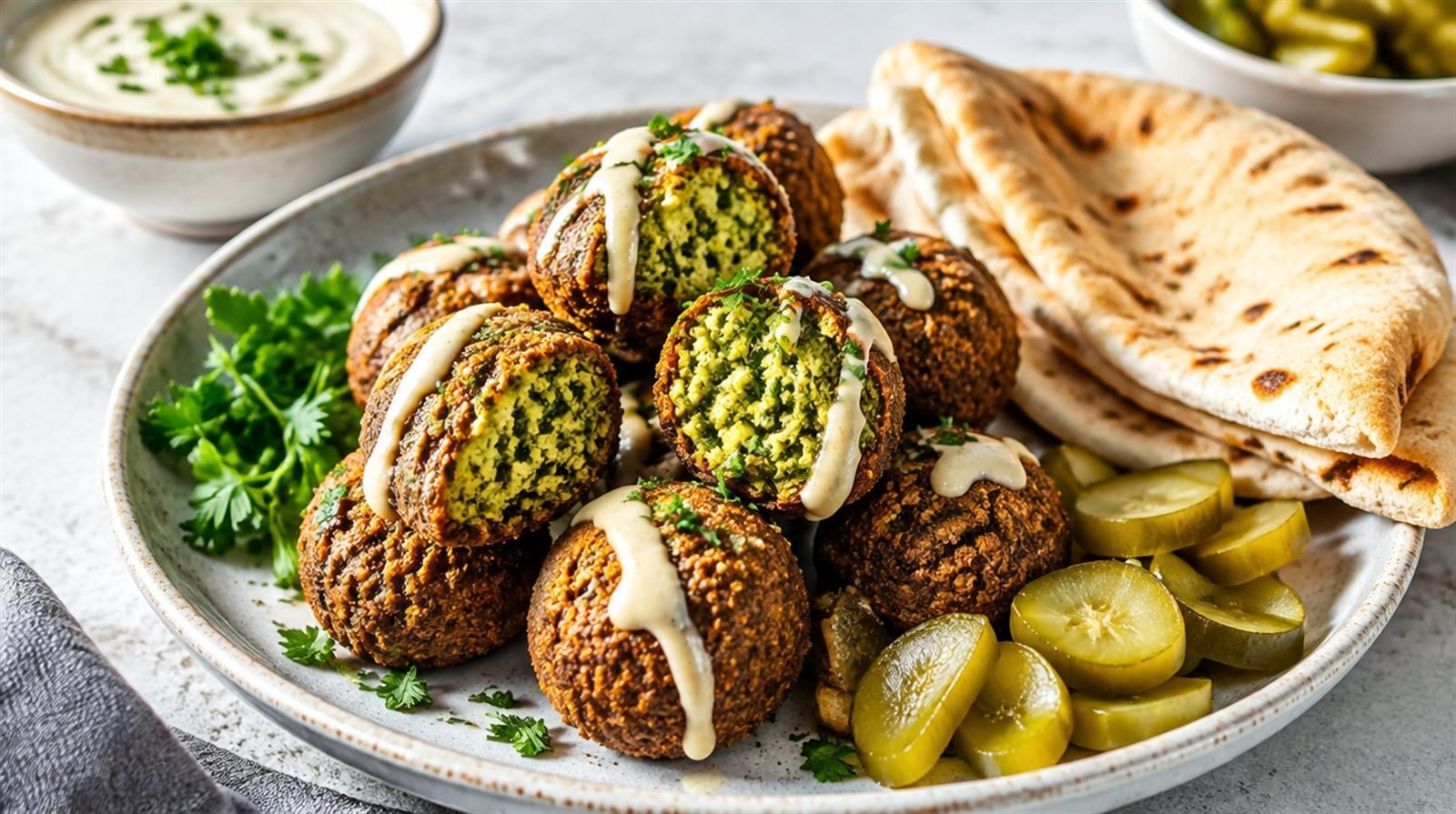
Good falafel seasoning starts with cumin and coriander, backed by garlic, salt, black pepper and a big handful of fresh herbs, and it only works when the chickpeas are dried, soaked overnight and never cooked before frying. Get those two things right and homemade falafel comes out crisp outside, green and fluffy inside, and holds together in the oil.
Most falafel failures have nothing to do with the spices. They come from canned chickpeas, a mixture that is too wet, or oil that is not hot enough.
We blend a Falefel seasoning in our Madison Heights shop, spelled the way our family has always spelled it. Here is what goes into good falafel seasoning, how to make the mixture, and how to keep it from falling apart.
What is in falafel seasoning?
Falafel seasoning is built on ground cumin and ground coriander in roughly equal amounts, with garlic, salt and black pepper behind them. Some cooks add a little cayenne or Aleppo pepper for warmth, and some add a pinch of cardamom. Fresh parsley and cilantro are not spices, but they are just as important, because they give falafel its green interior and fresh taste.
Cumin brings the earthy, toasty base. Coriander adds a citrusy lift that keeps the cumin from tasting heavy. Garlic and black pepper give it bite. If you build your own falafel spice mix, start with Kashat Cumin Ground, Kashat Coriander Ground and Kashat Garlic Powder, all ground fresh in small batches.
Our Kashat Falefel blend puts those pieces together in one jar. The exact ratio is a family recipe, but a blend like this typically contains cumin, coriander, garlic, black pepper and salt, and it is meant to be mixed straight into the chickpeas.
How much falafel spice mix per batch?
Use about 1 to 1 1/2 tablespoons of falafel seasoning per cup of dried chickpeas, which becomes roughly 2 1/2 cups once soaked. Fry one test piece, taste it, and adjust the salt and spice before you shape the rest. Raw mixture tastes flatter than fried falafel, so judge by the cooked piece.
How to make falafel step by step
Falafel is a soak, a grind, a rest and a fry. None of the steps are hard, but skipping the soak or the rest is where things go wrong.
- Soak dried chickpeas. Cover 1 cup of dried chickpeas with plenty of cold water and leave them for 12 to 24 hours. They will more than double in size. Do not cook them.
- Drain and dry. Drain thoroughly and pat the chickpeas dry with a towel. Extra water is the enemy of a falafel that holds together.
- Grind coarse. Pulse the chickpeas in a food processor with 1 cup of packed parsley, a handful of cilantro if you like, half a small onion, 3 or 4 garlic cloves and the seasoning. Stop at coarse wet sand that holds together when pressed, not a smooth paste.
- Rest. Cover and refrigerate for 30 minutes to an hour. The starch hydrates and the mixture firms up. If you use baking soda for a lighter texture, stir in half a teaspoon just before shaping.
- Shape. With wet hands or a falafel scoop, form balls or small patties about the size of a walnut. Press firmly.
- Fry. Heat 2 to 3 inches of neutral oil to 350 to 375°F. Fry in small batches for 3 to 4 minutes, turning once, until deep golden brown.
- Drain and salt. Lift onto a rack, not paper towels, and sprinkle with a little salt while hot.
What temperature should you fry falafel?
Fry falafel in oil held between 350 and 375°F. That range is hot enough to set the outside in the first seconds, which is what keeps the ball intact, and not so hot that the crust darkens before the center cooks through.
If you do not have a thermometer, drop in a small piece of mixture: it should sizzle hard and rise to the surface within a few seconds. Fry a single test falafel first. If it breaks apart or soaks up oil, the oil is too cool. If it is dark outside and raw inside, the oil is too hot. Let the oil come back to temperature between batches.
Can you bake or air fry falafel?
Yes, though baked and air-fried falafel will never be as crisp as fried. Brush or spray shaped patties with oil and bake at 400°F for 20 to 25 minutes, flipping halfway, or air fry at 375°F for 12 to 15 minutes. Adding a tablespoon of flour or chickpea flour to the mixture helps it bind when there is no fryer to set the crust.
Why does my falafel fall apart?
Falafel falls apart for one of five reasons: canned or cooked chickpeas, a mixture that is too wet, a grind that is too fine or too coarse, oil that is too cool, or no rest before frying. The first is the most common, and the only one you cannot fix once the mixture is made.
| Problem | Likely cause | Fix |
|---|---|---|
| Falls apart in the oil | Canned or cooked chickpeas | Start over with dried chickpeas, soaked and uncooked |
| Loose, will not shape | Mixture too wet | Drain and pat dry, then work in 1 to 2 tablespoons of flour |
| Crumbles after frying | Ground too coarse, no rest | Pulse a few more times, refrigerate 30 minutes |
| Dense and gummy | Ground into a paste | Pulse, do not blend, and stop at coarse wet sand |
| Greasy and breaking | Oil too cool | Bring oil to 350 to 375°F and fry in smaller batches |
The fixes are simple once you know the cause. Squeeze a little of the mixture in your fist. If it holds its shape when you open your hand, it will hold in the oil.
How do you serve falafel?
Serve falafel hot, within minutes of frying, tucked into pita with tahini sauce, tomato, cucumber, pickles and sumac onions. It is just as good over a salad or a rice bowl with a spoon of hummus. A handful of chopped parsley on top brings the fresh flavor back, and when fresh runs out, a pinch of Kashat Dried Parsley in the tahini sauce does the job.
Frequently Asked Questions
Can I use canned chickpeas for falafel?
No. Canned chickpeas are already cooked, so they have none of the raw starch that holds falafel together, and the mixture turns into a paste that falls apart in the oil or fries into a dense, mushy ball. Use dried chickpeas soaked in water for 12 to 24 hours and drained well. If canned is all you have, make chickpea patties with flour and egg and pan-fry them, but they will not be falafel.
How long does falafel mixture keep?
The mixture keeps in the refrigerator for a day or two in a covered container, and it shapes better after a rest. For longer storage, shape the falafel and freeze them raw on a tray, then move them to a bag. Fry straight from frozen, adding a minute or two to the cooking time. Fried falafel keeps a few days but loses its crispness, so reheat it in a hot oven rather than a microwave.
Why is my falafel not green inside?
Not enough fresh herbs. The bright green color comes from a large amount of parsley and cilantro blended into the chickpeas, usually a cup or more of packed leaves per cup of dried chickpeas. Dried parsley adds flavor but not that color. Frying too long also dulls the green, so pull the falafel when the outside is deep golden brown rather than dark.
Can I make falafel with fava beans?
Yes. Egyptian falafel, called ta’ameya, is made with dried split fava beans instead of chickpeas, and some cooks use a mix of the two. The same rules apply: soak the dried beans, never use cooked or canned, and season with the same cumin, coriander, garlic and herbs. Fava falafel comes out a little softer and greener inside than the chickpea version.
Get Kashat Falefel blend, our falafel seasoning, hand-mixed in small batches so the cumin and coriander taste as fresh as the herbs, and skip measuring five jars every time. Order today and it ships in 1 to 3 business days.