How to Use Turmeric in Everyday Cooking (Without It Tasting Chalky)
The best way to use turmeric in cooking is to bloom a small amount in hot oil or butter at the start of a dish, then build rice, eggs, soup or vegetables on top of that golden base. Knowing how to use turmeric in cooking this way separates a rich, warm flavor from the raw, chalky taste people complain about.
Turmeric is the ground root of a plant in the ginger family, and it is the reason curry powder, many rice dishes and Iraqi pickles are yellow. It tastes earthy, a little bitter, and gently warm, closer to ginger than to anything sweet.
This post stays in the kitchen. Here is what turmeric tastes like, why it goes chalky, eight ways to use it every week, how much to add, and how to get the stains off your counter.
What does turmeric taste like?
Turmeric tastes earthy, slightly bitter and gently warm, with a musky note some people compare to mustard or ginger. On its own it is not a loud spice. Its job is usually color and background depth, which is why it fits into so many dishes without any of them tasting the same.
Fresh turmeric root tastes brighter and more like ginger, with a citrus edge. Dried ground turmeric is more concentrated and more earthy.
Why does turmeric taste chalky, and how do you fix it?
Turmeric tastes chalky when it goes into a dish raw, stirred into liquid or dusted on at the end. The powder never dissolves, so you taste dry starch and bitterness instead of the warm flavor underneath. Cooking it in fat for a few seconds fixes this, and most advice on how to use turmeric in cooking skips that step.
Heat two tablespoons of oil or butter, add the onions or garlic if the recipe has them, then stir in the turmeric for 10 to 20 seconds until the oil turns deep gold and smells toasted. Add the liquid or rice right away so it does not scorch. We covered the full method in our post on how to bloom spices.
Three other things keep turmeric in balance. Fat, since the flavor and color both dissolve in oil. Salt and acid, because a squeeze of lemon at the end lifts the earthiness. And a little Kashat Black Pepper Ground, whose sharp heat rounds out turmeric’s flat, earthy side. The two are classic partners in the pan.
How to use turmeric in cooking: 8 everyday ideas
These are the eight turmeric recipes and uses we come back to most when people ask how to use turmeric in cooking.
1. Yellow rice
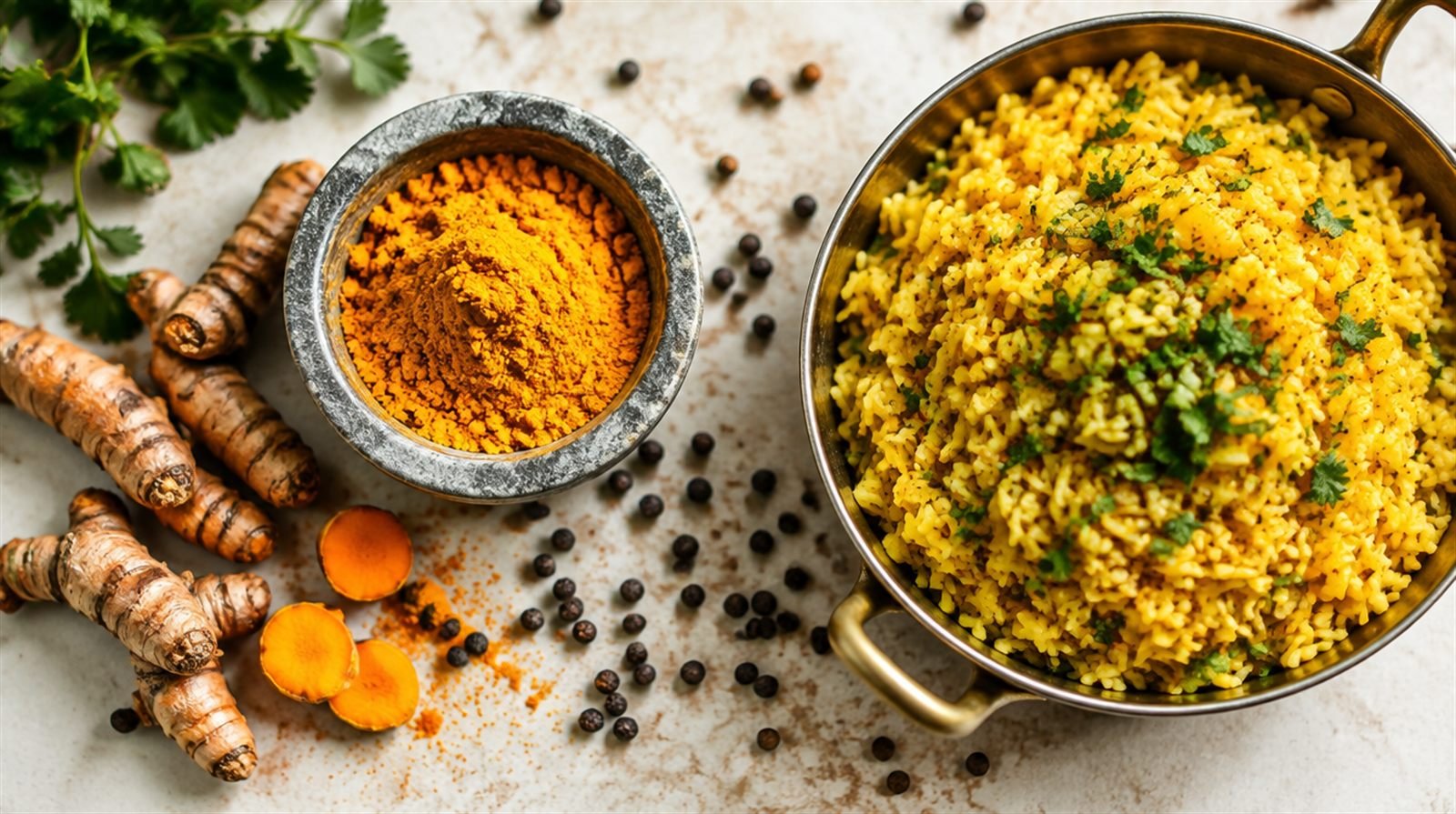
Bloom half a teaspoon of turmeric in a tablespoon of butter or oil, add a pinch of Kashat Cumin Ground, then stir in one and a half cups of rinsed rice before the water. The grains turn a soft gold. This is the everyday yellow rice that sits under stews.
2. Scrambled eggs
Melt the butter, stir in a quarter teaspoon of turmeric and a pinch of salt, then pour in the eggs. The color deepens and the eggs pick up a warm, savory edge.
3. Roasted vegetables
Toss cauliflower, potatoes, carrots or chickpeas with oil, a teaspoon of turmeric, a teaspoon of cumin and salt, then roast at 425°F until the edges brown. Because the oil coats the vegetables, the turmeric blooms in the oven.
4. Soups and lentils
Red lentil soup is the classic. Soften an onion in oil, bloom a teaspoon of turmeric and a teaspoon of cumin, add lentils and water, and simmer until soft. Finish with lemon.
5. Marinades
Mix turmeric into yogurt with garlic, lemon and salt for chicken, or into oil with cumin and paprika for fish. The fat carries the color and flavor into the meat. Marinate for 30 minutes to overnight.
6. Golden milk
Warm a cup of milk, dairy or not, with half a teaspoon of turmeric, a pinch of cinnamon, a little honey or sugar and a crack of black pepper, whisking so the powder does not settle. It is a comforting evening drink with a mild, earthy sweetness.
7. Pickles
Turmeric is what makes Iraqi turshi and amba yellow. Add half a teaspoon to a quart of brine. It colors the vegetables over a few days and adds a mild, earthy undertone that suits vinegar.
8. Curry
Turmeric is the backbone of every curry powder, including our Kashat Curry Mild. When you bloom the blend in oil with the onions, you are blooming turmeric along with everything else, which is why a well-made curry never tastes chalky.
How much turmeric should you use?
Start with a quarter teaspoon per serving in most dishes and stop at about a teaspoon per pot unless the recipe is built around it. The bitterness sneaks up, so the last lesson in how to use turmeric in cooking is restraint.
| Dish | Amount | When to add |
|---|---|---|
| Rice (1 1/2 cups dry) | 1/2 teaspoon | Bloom in fat before the rice |
| Eggs (2 to 3) | 1/4 teaspoon | In the butter before the eggs |
| Roasted vegetables (1 tray) | 1 teaspoon | Tossed with oil before roasting |
| Soup or lentils (1 pot) | 1 teaspoon | Bloom with the onions |
| Marinade (1 pound of meat) | 1/2 teaspoon | Mixed into yogurt or oil |
| Golden milk (1 cup) | 1/2 teaspoon | Whisked into warm milk |
| Pickle brine (1 quart) | 1/2 teaspoon | Stirred into the brine |
How do you get turmeric stains out?
Act fast, use soap and hot water, then let the sun do the rest. Turmeric’s color clings to plastic, wood, grout and fingernails, but it also fades in sunlight. Cooking with turmeric regularly means picking up a few cleanup habits.
- Countertops: wipe right away with hot soapy water, then use a paste of baking soda and water on anything that remains.
- Cutting boards and plastic containers: wash, then leave them in direct sunlight for a few hours.
- Fingers: rub with lemon juice or the baking soda paste, then wash.
- Clothes: rinse in cold water, dab with dish soap, wash, and dry in the sun, not the dryer.
- Prevention: use stainless steel spoons and glass bowls, wear an apron, and measure over the pot rather than the counter.
Frequently Asked Questions
Does turmeric taste like curry?
No. Curry powder tastes the way it does because of the whole blend, with cumin, coriander, chili and warm spices alongside the turmeric. On its own, turmeric is earthy, slightly bitter and gently warm, and it contributes color and depth more than a strong flavor of its own. If you want curry flavor, use a curry blend. If you want golden color and mild earthiness, use turmeric.
Can I use fresh turmeric instead of ground?
Yes. Peel the root with the edge of a spoon, grate it finely, and use about one tablespoon of fresh for every teaspoon of ground. Fresh turmeric tastes brighter and more like ginger, so it suits marinades, drinks and quick sautés. Ground is more concentrated and earthier, and it works better in rice, soups and long cooks. Both stain, so grate over a plate you do not mind coloring.
Do you have to cook turmeric before eating it?
You do not have to, but it tastes far better when you do. Raw turmeric powder has a dry, chalky texture and a sharp bitterness, and a short bloom in warm fat softens both. If a recipe stirs turmeric into something cold, such as a dressing or a drink, mix it into the oil or a spoonful of warm liquid first so it dissolves instead of clumping.
Why did my dish turn bitter after adding turmeric?
Either too much went in, or it burned in the oil. A teaspoon per pot is the ceiling for most dishes. If the turmeric hit smoking-hot oil, it scorched in seconds, and burnt turmeric tastes acrid all the way through. Next time bloom it over medium-low heat for 10 to 20 seconds, add liquid right away, and finish with lemon to balance any bitterness that remains.
Get Kashat Turmeric, ground fresh in small batches in Madison Heights, and pair it with Black Pepper Ground and Cumin Ground for the three-jar base behind yellow rice, roasted vegetables and lentil soup. Shop the singles together and your weeknight cooking gets a lot more golden.