How to Bloom Spices (and Why Your Curry Tastes Flat)
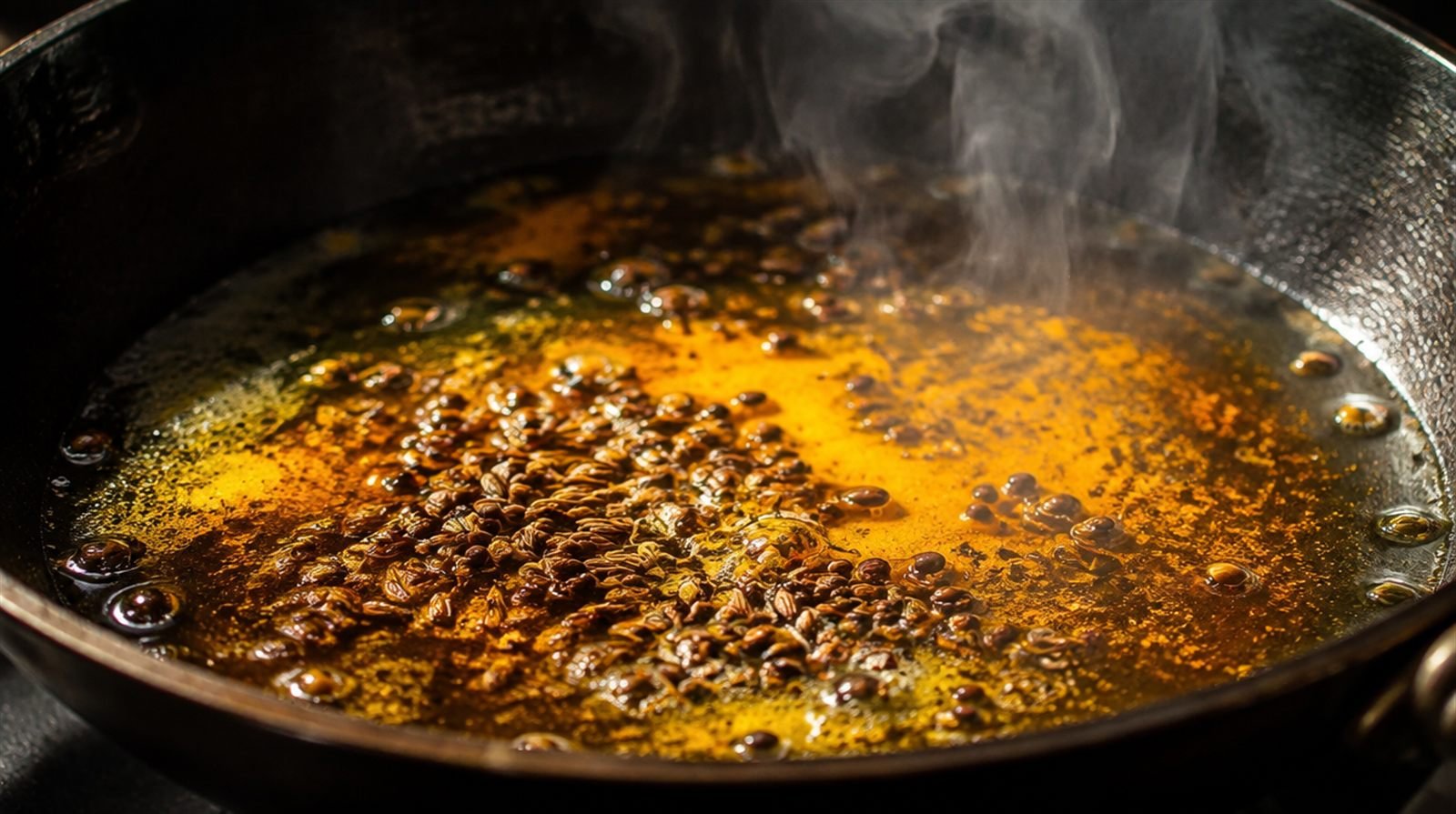
To bloom spices, heat them briefly in hot fat before the other ingredients go in, so their fat-soluble aromatics dissolve into the oil and spread through the whole dish. Knowing how to bloom spices is the single biggest fix for a curry that tastes dusty or flat, and it takes less than a minute at the stove.
Most of the flavor in cumin, mustard seed, turmeric and curry blends lives in oils that do not dissolve in water. Stir the powder into a watery pot and much of that flavor stays locked inside the grains.
We grind and hand-mix our blends in small batches in Madison Heights, and this is the technique we explain most often to customers who ask why their curry tastes bland.
What does it mean to bloom spices?
Blooming means cooking spices in fat, usually oil, ghee or butter, over medium heat for a short time until they smell strong and the oil takes on their color. The heat opens the spice, the fat pulls the aromatic compounds out, and the flavored oil then coats everything else you add to the pan.
Indian cooks call it tadka or tempering. Iraqi and other Middle Eastern kitchens do the same thing without a special word for it, frying the spices with the onion before the liquid goes in. Once you know how to bloom spices, you will notice it in every dish that starts with onions and oil.
How to bloom spices step by step
The method is the same for a weeknight lentil soup or a big pot of chicken curry. Whole spices go in first because they can take more heat, and ground spices go in last because they burn fast.
- Warm the fat. Put 2 to 3 tablespoons of oil or ghee in the pan over medium heat. Wait until it shimmers but before it smokes.
- Add whole spices. Drop in whole seeds such as Kashat Cumin Seeds or Mustard Seeds. Mustard seeds start to pop within about 30 seconds. Once the popping slows and the cumin turns a shade darker, move on.
- Add the aromatics. If the recipe uses onion, garlic or ginger, add them now and cook until soft. The water in the onion protects the whole spices from burning while you work.
- Lower the heat and add ground spices. Turn the burner to medium-low, then stir in ground spices or your curry blend. Keep stirring for 15 to 30 seconds. The mixture will smell strong and look a shade darker and glossier.
- Add liquid right away. Tomatoes, stock, coconut milk or water stops the cooking and carries the flavored oil through the dish.
How long do whole and ground spices take to bloom?
Whole spices can take more heat and time. Ground spices release their flavor in seconds and scorch just as fast. Use this as a guide.
| Spice form | Heat | Time in fat | Ready when |
|---|---|---|---|
| Whole seeds (cumin, mustard, coriander) | Medium | 30 to 60 seconds | Seeds sizzle, pop and darken slightly |
| Whole pods and bark (cardamom, cinnamon, cloves) | Medium | 45 to 90 seconds | Pods puff and the oil smells sweet |
| Ground single spices (turmeric, cumin, coriander) | Medium-low | 15 to 30 seconds | Strong aroma, oil turns the spice’s color |
| Ground blends (curry, baharat) | Medium-low | 15 to 30 seconds | Paste looks glossy and smells toasted, not raw |
Kashat Turmeric shows why timing matters. Ten seconds in warm oil turns it from chalky to golden. Forty-five seconds on high heat turns it bitter.
Blooming spices in oil vs toasting spices dry: which should you use?
Blooming spices in oil is for flavoring the dish you are about to cook. Toasting spices dry, in a pan with no fat, is for whole spices you plan to grind or sprinkle afterward. Both wake the spice up, but they serve different jobs.
Dry toasting works best with whole seeds. Shake them in a dry skillet over medium heat for two to four minutes until they smell nutty, then cool and grind. It is the reason freshly ground spices taste so much louder than a jar that has sat for a year, a difference we covered in our post on fresh-ground versus pre-ground spices.
Oil blooming is better for ground spices and blends, because a dry pan scorches powder almost instantly. If a recipe says to toast a curry blend, use a little fat instead and follow the steps above.
What are the most common mistakes when blooming spices?
Nearly every failed batch comes down to the pan being too hot, the spices staying in too long, or the ground spices going in too early. Each produces the same result, bitterness. Learning how to bloom spices is mostly learning when to stop.
Too hot
Smoking oil is too hot for spices. Ground spices burn in seconds at that temperature, and burnt cumin or turmeric tastes acrid all the way through the pot. If the oil smokes, pull the pan off the heat, let it settle, then start again at medium.
Too long
Blooming is measured in seconds, not minutes. The signal to stop is aroma, not color. Once the kitchen smells strongly of the spice, you are done. Dark brown means it has already gone too far.
Too early
Ground spices added to bare hot oil before the onions have no protection. Add whole spices first, then onions, then ground spices once the onions are soft. The moisture from the onions gives you a wider window.
Why does my curry taste bland, and how does blooming fix it?
A curry usually tastes bland because the spice blend was stirred into liquid instead of cooked in fat first. The spices never opened, so they taste raw and dusty no matter how much you add. Blooming solves this without changing the recipe at all, and it is the whole reason to learn how to bloom spices in the first place.
Here is the fix for the next pot. Fry your onion in oil until soft, drop the heat, stir in two tablespoons of Kashat Curry Mild or Curry Hot, cook for 20 seconds until the paste smells toasted, then add the chicken, tomato or stock. The same blend that seemed weak before will now taste full and warm.
Frequently Asked Questions
Can you bloom spices in butter?
Yes, but plain butter burns at a lower temperature than oil, so keep the heat at medium-low and watch it closely. Ghee, which is clarified butter with the milk solids removed, is the better choice because it can take more heat and gives the same rich flavor. Many cooks use half butter and half neutral oil to get the taste of butter with a safer margin.
Do you need to bloom spices for every recipe?
No, blooming matters most in dishes with a lot of liquid, such as curries, stews, soups, rice and lentils, where the flavored oil has to carry the spice through the whole pot. Dry rubs on grilled meat, spices sprinkled over finished food, and baked goods do not need it. If a recipe already fries the spices with the onion, you are blooming whether it uses the word or not.
Can you bloom a pre-mixed curry blend?
Yes, and it is the best way to use one. Treat a blend like any ground spice: add it after the onions are soft, keep the heat at medium-low, stir for 15 to 30 seconds, then add liquid. Because blends often contain turmeric and other fine powders, they scorch quickly, so stay at the stove for that half minute and have the liquid measured and ready.
What should I do if the spices burn?
Throw them out and start again with fresh oil. Burnt spices taste bitter, and that bitterness spreads through the entire dish, so it is not worth trying to save a few cents of cumin. Wipe the pan, lower the heat a notch, and the second attempt will take less than two minutes. Keep the liquid measured and within reach so you can stop the cooking on time.
Once you know how to bloom spices, every pot of curry, soup and rice gets better with no extra ingredients. Get Kashat Curry Mild or Curry Hot, ground fresh and hand-mixed in Madison Heights, and shop whole Cumin Seeds to practice with this week.