Amba and Turshi: The Iraqi Pickle Flavors Explained
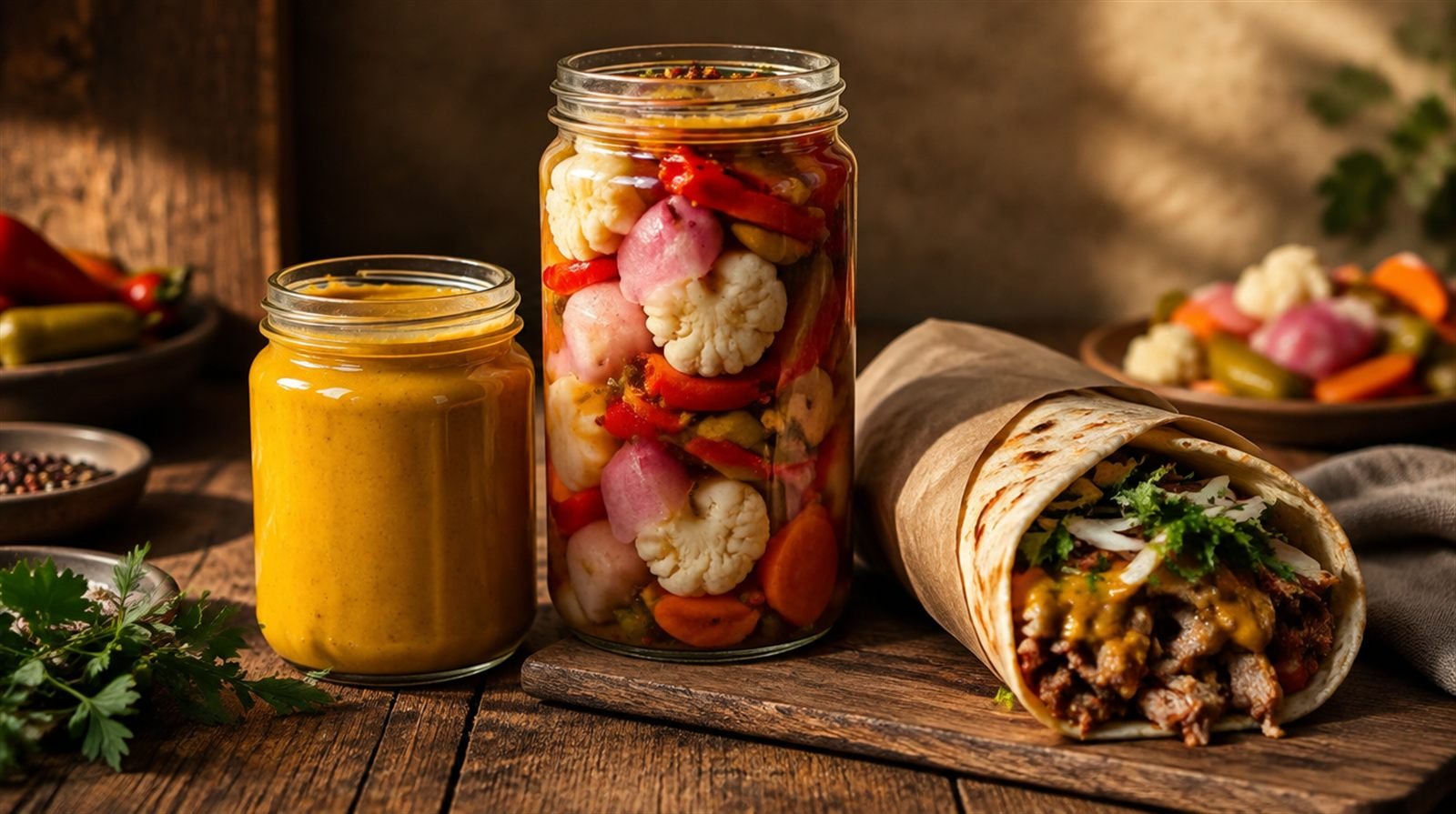
Amba sauce is a tangy, savory condiment made from pickled mango, fenugreek, turmeric and chili, Iraqi in origin and now a fixture on shawarma, falafel and sabich. Turshi is its pickled cousin: mixed vegetables in a sour, spiced brine. Both put sharp, sour flavor next to rich meat and bread, which is why they share a table.
In Iraqi and Chaldean homes, a jar of amba and a jar of turshi sit on the table the way ketchup and mustard do elsewhere. They cut through fatty lamb, rich rice and fried kubba, and a shawarma without them tastes unfinished.
This guide explains what each one is, the spices that go into them, how Kashat’s Curry Amba and Curry Turshi blends fit, and a quick refrigerator turshi you can make this week.
What is amba?
Amba is a pickled mango condiment. Green, unripe mangoes are salted and cured, then cooked or blended with fenugreek, turmeric, mustard, chili and vinegar into a thick, pourable sauce that ranges from bright yellow to deep gold.
The name comes from a word for mango in India, and the sauce is generally traced to trade between Baghdad and India. It became a staple of Iraqi Jewish kitchens and traveled with those families to Israel, where it is now standard on shawarma and sabich, while it stayed on tables across Iraq.
What does amba sauce taste like?
Amba sauce tastes sour and salty first, then bitter and pungent from fenugreek, earthy from turmeric, with mild heat and a faint funk from the cure. It is closer to a sharp mustard pickle than to a sweet mango chutney.
What do you put amba sauce on?
Shawarma and falafel sandwiches are the classic uses, and it is the defining sauce on sabich, the fried eggplant and egg pita. Beyond that, spoon it on grilled meat, fried eggs, roasted potatoes or cauliflower, or plain rice, or stir a little into yogurt for a quick dip.
What spices go into amba sauce?
Fenugreek is the signature spice in amba sauce, and turmeric gives it the color. Mustard seed, dried chili and salt round it out, and some cooks add cumin, coriander or a little garlic. Vinegar or lemon carries the sourness alongside the cured mango.
Kashat Fenugreek Seeds are sold whole. Toast them briefly and grind them, or simmer them whole in the sauce and strain, because raw fenugreek is very bitter. Kashat Mustard Seeds and Kashat Turmeric supply the sharpness and the gold.
| Spice | Role in amba | Role in turshi |
|---|---|---|
| Fenugreek | The signature bitter, maple-like note | Occasional, in small amounts |
| Turmeric | Color and earthy base | Turns the brine and turnips yellow |
| Mustard seed | Sharpness | Common in the brine |
| Chili | Mild to medium heat | Whole chilies in the jar |
| Coriander and cumin | Optional depth | Often in the brine |
| Kashat blend | Curry Amba | Curry Turshi plus Pickling Spice |
What is turshi?
Turshi (also torshi or tursu) is the family of mixed vegetable pickles eaten across Iraq, Iran, Turkey and the Balkans. Iraqi turshi usually means turnips, cauliflower, carrots, cucumbers, peppers and cabbage packed together in a vinegar or salt brine.
Two things mark the Iraqi jar. Turnips are often dyed pink with a slice of beet, and the whole batch is often tinted yellow with turmeric and a curry-style spice mix, which gives it a mustardy, warm edge that plain pickles lack.
Turshi goes with everything heavy: kabob, kubba, quzi rice, shawarma and falafel. It is the crunchy, sour counterpoint on the plate.
What spices go into turshi?
A typical Iraqi turshi brine holds salt, vinegar, garlic, turmeric, mustard seed, coriander seed, whole chilies and sometimes bay leaf and black peppercorns. Kashat Pickling Spice covers the whole-spice base, and a curry-style blend adds the yellow color and warmth.
How do you use Kashat Curry Amba and Curry Turshi?
Kashat Curry Amba is a curry blend built in the amba direction, leaning on fenugreek and turmeric, and Kashat Curry Turshi is the pickle-style curry blend for brines and cooking. They are the two specialty members of Kashat’s curry family, alongside Curry Mild and Curry Hot. Exact ratios are family recipes.
Ways to use Curry Amba
- Make a quick amba-style sauce: blend a cup of mango (fresh, frozen or jarred unsweetened) with 2 tablespoons vinegar, 1 tablespoon Curry Amba, 1 teaspoon salt and a splash of water, simmer five minutes, and cool.
- Rub it on chicken thighs or cauliflower with oil before roasting.
- Stir a teaspoon into plain yogurt for a shawarma sauce.
- Toss it with hot roasted potatoes and a squeeze of lemon.
Ways to use Curry Turshi
- Add 1 to 2 teaspoons to each quart of pickle brine, as in the method below.
- Season roasted cauliflower or carrots with it for the turshi flavor without the wait.
- Whisk it into a vinaigrette for cabbage slaw served with kabob.
How do you make quick turshi at home?
This is a refrigerator pickle, ready in a few days and kept cold. It is not a shelf-stable canning recipe, so store it in the fridge.
- Cut about 2 pounds of mixed vegetables: cauliflower florets, carrot sticks, turnip wedges, cucumber spears and strips of bell pepper. Add a few peeled garlic cloves and one or two whole chilies.
- Make the brine: 2 cups white vinegar, 2 cups water, 2 tablespoons kosher salt, 1 tablespoon sugar (optional), 1 tablespoon Kashat Pickling Spice and 1 to 2 teaspoons Curry Turshi. Bring to a boil, then simmer 2 minutes.
- Pack the vegetables tightly into clean jars. Tuck a slice of raw beet in with the turnips if you want them pink.
- Pour the hot brine over the vegetables until they are fully covered. Let the jars cool with the lids loose, then seal and refrigerate.
- Wait at least 3 days. The flavor is best after a week. Keep refrigerated and eat within about a month.
For a yellower, warmer jar, increase the Curry Turshi. For a plainer one, use Pickling Spice alone.
Frequently Asked Questions
Is amba sauce spicy?
Amba sauce is mildly spicy at most. Its dominant flavors are sour, salty and the bitter pungency of fenugreek, with turmeric underneath. Most commercial and homemade versions include some chili, but the heat is gentle and sits behind the tang. If you want more heat, add crushed red pepper or a fresh chili to your own batch. If you want less, leave the chili out and let the fenugreek lead.
What can I use instead of amba?
The closest substitute for amba is a sharp mustard pickle or piccalilli thinned with a little vinegar and dusted with turmeric. A spoon of mango chutney mixed with mustard and a pinch of ground fenugreek gets close in a hurry, though it will be sweeter. For the flavor without the mango, stir Kashat Curry Amba into plain yogurt, or into a splash of vinegar and oil, and use it as a sauce.
What vegetables go in Iraqi turshi?
Turnips, cauliflower, carrots, cucumbers, bell peppers and cabbage are the usual mix in Iraqi turshi, often with whole garlic cloves and green chilies in the jar. Some families add green tomatoes, eggplant or beets, and a slice of beet is what turns the turnips pink. Cut everything to a similar size so it pickles evenly, and pack it tightly so the brine covers it.
Why is turshi yellow?
Turshi is yellow because of turmeric, either on its own or as part of a curry-style spice blend added to the brine. The color is traditional in Iraqi and Gulf pickles, and it comes with a mild mustardy warmth that plain vinegar pickles do not have. Kashat Curry Turshi is the blend built for this, and a teaspoon or two per quart of brine is enough to color a whole jar.
Get Kashat Curry Amba and Kashat Curry Turshi and put both Iraqi pickle flavors on your table this week. Orders ship in 1 to 3 business days.