Curry Mild vs Curry Hot: How to Pick the Right Kashat Curry Blend
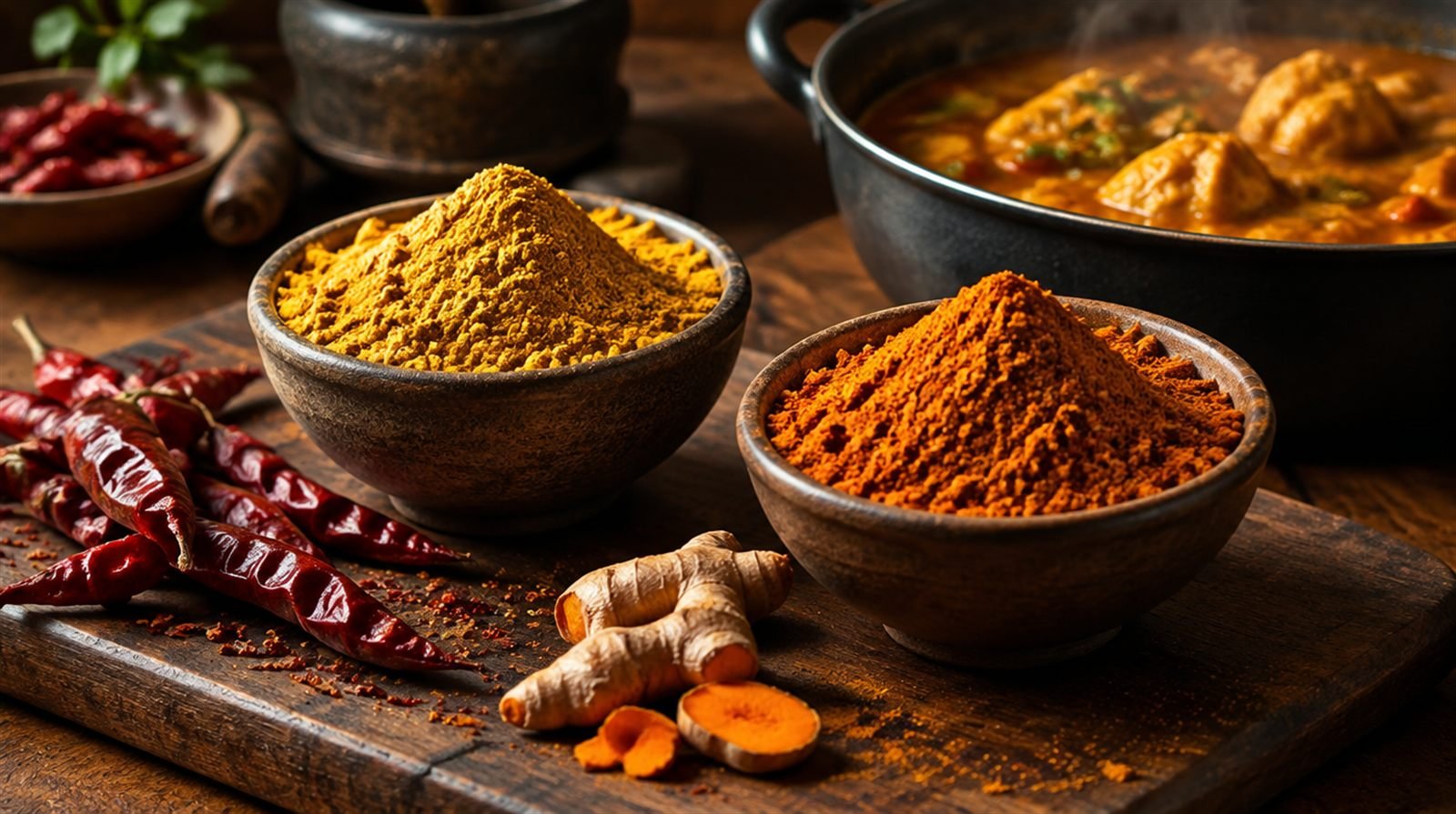
The difference between mild curry vs hot curry is chili heat, not character: a mild curry powder carries the warm, turmeric-forward flavor on its own, and a hot curry powder adds more chili so the finish burns. At Kashat, Curry Mild suits kids and mixed tables, and Curry Hot suits people who like a curry that bites back.
Iraqi curry is a home dish more than a restaurant dish. Chicken or lamb, potatoes, onion, a little tomato, and a curry powder that leans gentler and rounder than most Indian blends. It simmers on a weeknight and gets eaten over rice.
We make four curry blends in Madison Heights. Two are everyday cooking blends, Curry Mild and Curry Hot. Two are specialty blends built for Iraqi pickles, Curry Amba and Curry Turshi. Here is how to pick.
What is Iraqi curry, and how is it different from Indian curry powder?
Iraqi curry, often just called kari at home, is a mild, turmeric-colored stew with roots in the long trade between the Gulf and India. The powder behind it tends to be simpler and less hot than Indian curry powders, with turmeric, cumin and coriander in front and warm spices such as cardamom, cinnamon and black pepper behind.
Indian curry powder is a broad shorthand for many regional masalas, and it ranges from mild to fierce, often with fenugreek, mustard and chili well forward. An Iraqi-style blend is usually softer and more fragrant, which is why it works with potatoes and plain rice without overwhelming them.
Our Curry Mild and Curry Hot follow the Iraqi side of that family. The exact ratios are a family recipe, but blends like these typically contain turmeric, cumin, coriander, black pepper and warm spices, with more chili in the hot version.
Mild curry vs hot curry: what is the difference?
Heat is the difference in mild curry vs hot curry. Both blends are made for Iraqi-style curry, so the warm, fragrant base feels familiar in either one. Curry Hot carries more chili, so the same dish finishes with a noticeable burn that builds over the meal instead of fading.
| Feature | Curry Mild | Curry Hot |
|---|---|---|
| Heat | Gentle, no burn | Noticeable, builds as you eat |
| Flavor | Warm, fragrant, turmeric-forward | The same warmth with chili on the finish |
| Who it suits | Kids, mixed tables, first-time curry cooks | Spicy-food households, anyone who adds hot sauce to everything |
| Best dishes | Chicken and potato curry, vegetable curry, rice, roasted vegetables, soups | Lamb curry, chicken thigh curry, chickpea stew, spiced ground beef, anything served with cooling yogurt |
| Starting amount | 1 tablespoon per pound | 2 teaspoons per pound, then add to taste |
Who should choose Curry Mild?
Choose Kashat Curry Mild if you cook for children, for guests whose tolerance you do not know, or for anyone who wants the flavor of curry without the sweat. It is also the better curry powder for chicken breast, fish, cauliflower and eggs, where chili would take over. If you are weighing mild curry vs hot curry for the first time, start here.
Who should choose Curry Hot?
Choose Kashat Curry Hot if your table asks for more heat than a mild blend can give. It stands up to lamb, beef and chickpeas, and it is the one to reach for when the dish will be served with yogurt, rice or bread that can cool it down. Start with a little less than you would use of Mild and work up.
What are Curry Amba and Curry Turshi?
Curry Amba and Curry Turshi are specialty blends for Iraqi pickles, not for stew. Amba is the tangy pickled mango condiment that goes on shawarma and falafel, and turshi is the mixed vegetable pickle found on almost every Iraqi table. Each blend is seasoned for its pickle rather than for a pot of curry.
Kashat Curry Amba is seasoned for amba, a condiment known for its fenugreek and turmeric character. Kashat Curry Turshi is built for a brine of cauliflower, carrots, turnips and peppers. If you are shopping for dinner rather than pickling, stay with Mild or Hot.
How do you cook a basic chicken curry with Kashat curry powder?
Bloom the curry powder in oil with the onions before any liquid goes in. That single step separates a rich curry from a bland one, and it is the same whether you use Mild or Hot. We explain the timing in detail in our post on how to bloom spices.
- Brown 1 1/2 pounds of boneless chicken thighs in 2 tablespoons of oil over medium-high heat, then set them aside.
- Soften one chopped onion in the same pan for 5 to 6 minutes.
- Lower the heat and stir in 1 1/2 tablespoons of Curry Mild or 1 tablespoon of Curry Hot. Cook for 20 to 30 seconds until the oil turns gold and the blend smells toasted.
- Add 2 tablespoons of tomato paste, 2 diced potatoes, the chicken, 2 cups of water or stock and a teaspoon of salt.
- Simmer uncovered for 25 to 30 minutes, until the potatoes are tender and the chicken reaches 165°F.
- Finish with a squeeze of lemon and serve over rice.
Can you mix Curry Mild and Curry Hot?
Yes, and many households do, because the mild curry vs hot curry choice does not have to be either one or the other. Half and half gives a medium curry. Or keep Mild as the base and add Hot a teaspoon at a time at the end of the bloom until it is where you want it.
Mixing is also the easiest way to cook for a table with different tolerances. Make the pot with Mild, then bloom a spoonful of Hot in a little oil and serve it on the side for the people who want it.
Frequently Asked Questions
Is hot curry powder just mild curry powder with chili added?
Mostly, yes. The base spices in a hot curry powder are usually the same warm group found in a mild one, such as turmeric, cumin and coriander, and the heat comes from more chili, sometimes with extra black pepper or ginger. That is why the two can be mixed freely. Our exact ratios are a family recipe, but the rule holds: choose by the heat you want, because the underlying flavor stays in the same family.
Which curry powder is best for chicken?
Curry Mild is the safer choice for chicken, because chicken is delicate and the milder blend lets the meat, onion and potato come through. Use about a tablespoon per pound of chicken, bloomed in oil with the onions. If your household likes heat, Curry Hot works just as well with chicken thighs, which have enough fat and flavor to stand up to the chili.
How much curry powder should I use per pound of meat?
Start with one tablespoon per pound of meat or vegetables for Curry Mild, and about two teaspoons per pound for Curry Hot, then adjust after the first bowl. Curry powder is easier to add than to take away, and it tastes stronger after blooming in oil than it does raw. Taste for salt at the end, since salt is what makes the spices read as full rather than flat.
Is Iraqi curry the same as Indian curry?
No. Iraqi curry is a single, mild, home-style stew, usually chicken or lamb with potatoes in a light tomato and turmeric sauce, served over rice. Indian curry is a whole family of regional dishes, many far hotter and more complex, and Indian curry powder reflects that range. If you grew up with Iraqi or Chaldean cooking, an Iraqi-style curry blend will taste like home in a way a supermarket curry powder will not.
Get Kashat Curry Mild if you cook for the whole family, Kashat Curry Hot if you want the burn, or both and blend your own middle ground. Every jar is ground fresh and hand-mixed in small batches in Madison Heights.