Iraqi Dolma: How to Season Stuffed Grape Leaves and Vegetables
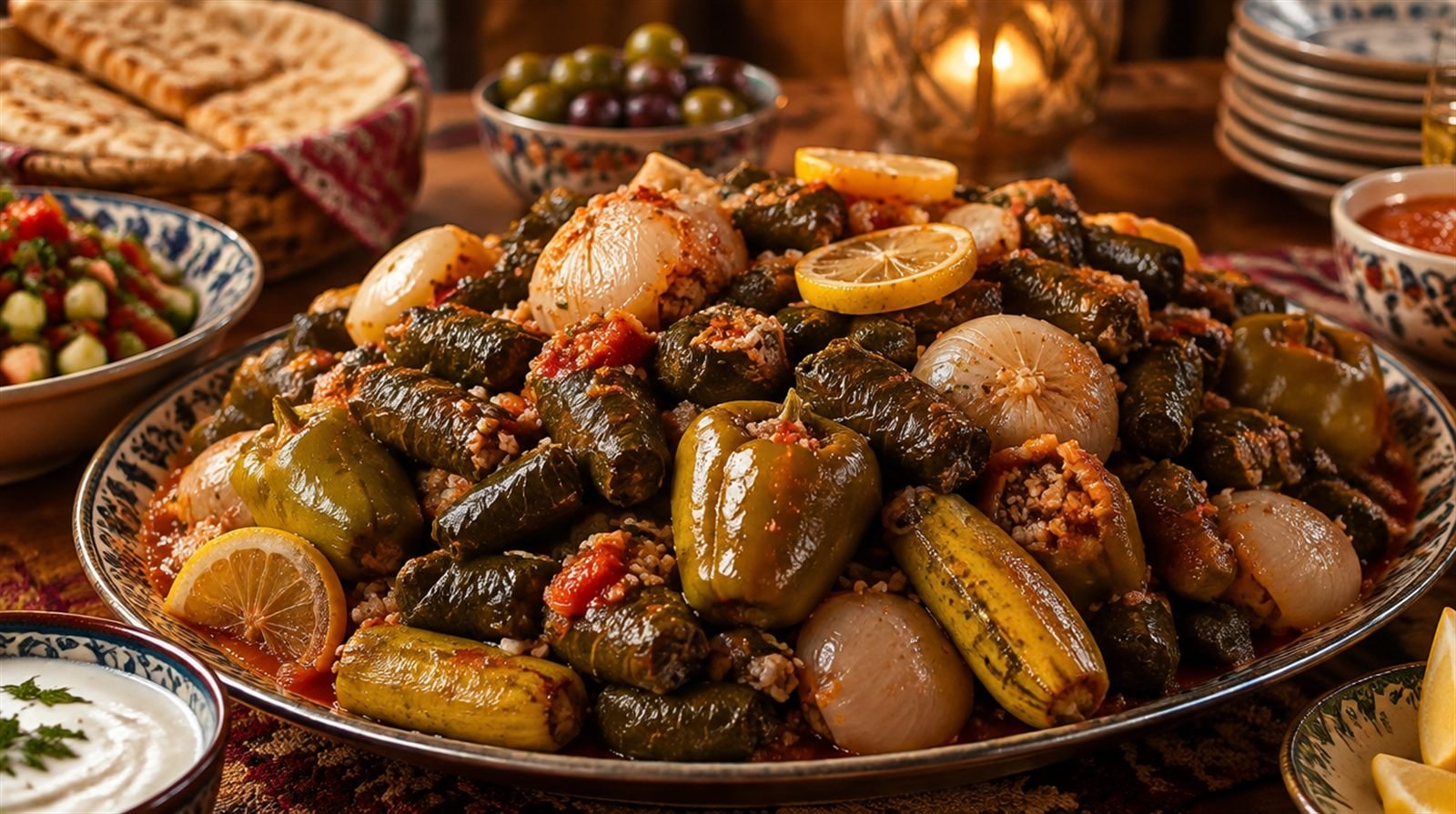
Iraqi dolma is a pot of mixed stuffed vegetables, grape leaves, onions, peppers, tomatoes, zucchini and sometimes eggplant or chard, filled with spiced rice and meat and simmered together in a tomato and lemon sauce until the whole pot can be turned out onto a platter. It is a family-table dish, and the seasoning is what makes it Iraqi.
If you learned dolma from a Greek or Turkish cookbook, the Iraqi version will look different: a full pot, not a tray of neat rolls, with a tangy red sauce.
This guide covers what sets Iraqi dolma apart, what goes into the filling, how to season the rice and the pot liquid, and how to get the sour balance right.
What makes Iraqi dolma different from Greek or Turkish dolma?
Iraqi dolma is different because it mixes many vegetables in one pot, uses a filling of rice and meat, and cooks everything in a tomato and lemon based liquid. Greek dolmades are usually grape leaves only, with rice, dill and lemon, and are often served cold. Turkish dolma covers both stuffed vegetables and rolled leaves, served cool or warm depending on whether there is meat.
| Iraqi dolma | Greek dolmades | Turkish dolma | |
|---|---|---|---|
| What is stuffed | Grape leaves plus onions, peppers, tomatoes, zucchini, eggplant | Grape leaves | Grape leaves, peppers, tomatoes, eggplant |
| Filling | Rice and ground meat with tomato paste and herbs | Rice, dill, mint, often no meat | Rice with or without meat, pine nuts, currants |
| Cooking liquid | Tomato, lemon, sometimes tamarind or pomegranate molasses | Water, lemon, olive oil | Water or light broth, olive oil |
| Seasoning | Warm spices, dried mint, dried lime | Dill, mint, lemon | Allspice, black pepper, cinnamon, mint |
| Served | Hot, as a main course | Cold or room temperature, as a starter | Warm with meat, cool without |
The other Iraqi signature is the layering: onions and trimmings on the bottom, leaves and heavier vegetables in the middle, the lightest on top, then a plate to weight it all down. Many families put lamb chops or bones on the bottom layer for richness.
What goes into Iraqi dolma filling?
The filling is short-grain or medium-grain rice, ground lamb or beef, finely chopped onion, tomato paste, chopped parsley and the dolma seasoning, all mixed raw and stuffed loosely into the vegetables. Some families add chopped tomato or a spoon of pomegranate molasses.
The rice goes in uncooked and swells as the pot simmers, so never pack the vegetables tight, or the leaves burst and the filling turns gummy.
What is dolma seasoning?
Dolma seasoning is typically a warm, savory mix of salt, black pepper, allspice and other baharat-style spices, brightened with dried mint and a sour note from dried lime, lemon or tamarind. Some Iraqi families add a touch of cinnamon, and some add curry or turmeric for a golden tint. The exact balance varies from house to house.
Our Kashat Dolma blend is our family’s version, ground fresh and hand-mixed in Madison Heights. The precise ratio is a family recipe, but it lives in that same warm-and-tangy territory and seasons both the filling and the pot.
The three jobs the seasoning does
Warm spices like allspice and black pepper give the meat and rice depth. Dried mint gives the lift that keeps a rich pot from tasting heavy. Sour, whether from lemon, tamarind or ground dried lime, ties the sauce to the filling and gives dolma its unmistakable tang.
How do you season the rice filling?
Season the filling generously, because the rice will absorb liquid from the pot and dilute the flavor as it cooks. Here is the order we follow.
- Rinse the rice until the water runs clear, then drain well. This keeps the filling from turning sticky.
- Combine the rice, ground meat, chopped onion, parsley and tomato paste in a large bowl.
- Add the dry seasoning. Use about a tablespoon of dolma spice per pound of meat and rice combined, plus salt to taste, and mix with your hands until it is evenly distributed.
- Add the sour. Stir in a squeeze of lemon juice or a small spoon of tamarind or pomegranate molasses so the filling is seasoned from the inside.
- Stuff loosely. Fill each vegetable about two thirds full and roll grape leaves snug but not tight.
How do you season the pot liquid?
The pot liquid should taste clearly tangy and a little salty on its own, because it is the sauce that ends up on the platter. Aim for something you would happily drink as a thin soup.
- Start with tomato. Dissolve tomato paste in warm water, enough to come about two thirds of the way up the layered vegetables.
- Add the sour. Lemon juice is the base. Add a pierced whole dried lime or half a teaspoon of ground dried lime for depth, or a spoon of tamarind or pomegranate molasses if your family uses it.
- Season. Add salt and a pinch of the same dolma spice you used in the filling so the sauce and the stuffing taste like one dish.
- Balance. Taste. If it is sharp, a teaspoon of sugar rounds it. If it is flat, add more lemon.
- Pour and weight. Pour the liquid over the pot, set a heatproof plate on top to hold everything down, cover, and simmer gently until the rice is tender.
- Rest and flip. Let the pot sit off the heat for ten minutes, then invert it onto a platter so the caramelized bottom layer ends up on top.
How do you get the sour balance right?
Aim for tangy, not puckering. The sourness in Iraqi dolma should be the first thing you notice, with the warm spices right behind it.
Use two sources of sour. Lemon juice brings clean, bright acidity, and dried lime or tamarind brings a deeper, rounder tang. Together they taste fuller than a lot of either alone.
Adjust at the end. The sauce concentrates as it cooks, so a liquid that tastes perfect before simmering can end up sharp. Taste when the rice is nearly done and add a little sugar or more lemon then.
If you want to practice the seasoning on a smaller scale before you commit to a full pot, our stuffed mini peppers recipe is a quick place to start.
Frequently Asked Questions
Is Iraqi dolma served hot or cold?
Iraqi dolma is served hot, straight from the pot and usually turned out onto a large platter for the table. This is one of the clearest differences from Greek dolmades, which are often served cold or at room temperature as a starter. Because Iraqi dolma contains meat and a rich tomato sauce, it works as a full main course with bread, yogurt and a simple salad on the side.
Can you make Iraqi dolma without meat?
Yes, a meatless version is common and just as traditional in many homes. Keep the rice, onion, tomato paste and herbs, add more chopped parsley and a little extra oil to make up for the richness the meat would have given, and season the same way. Some families add chopped tomato or chickpeas to the filling. The pot liquid stays the same, tomato, lemon and salt, so the flavor still reads as dolma.
Why is my dolma mushy or bland?
Mushy dolma usually comes from too much liquid in the pot or overcooking, and bland dolma comes from underseasoning the filling or skipping the sour. Use just enough liquid to come about two thirds of the way up the vegetables, and stop cooking once the rice is tender. Taste the raw filling for salt before you stuff, and make sure the pot liquid has enough lemon or dried lime to taste clearly tart.
What vegetables can you stuff for dolma?
Grape leaves, onions, bell peppers, tomatoes, zucchini and small eggplants are the usual choices in an Iraqi pot. Chard leaves and cabbage leaves are also common in some families. Hollow the vegetables with a small spoon or corer, keep the trimmings for the bottom of the pot, and do not overfill, since the rice expands as it cooks. Mixing several kinds in one pot is what gives Iraqi dolma its character.
Iraqi dolma is a dish worth learning once and making for the rest of your life. Get our Kashat Dolma blend, add a jar of ground dried lime for the pot, and start with a small batch this weekend.