What Is Sumac? Flavor, Uses, and 10 Ways to Cook With It
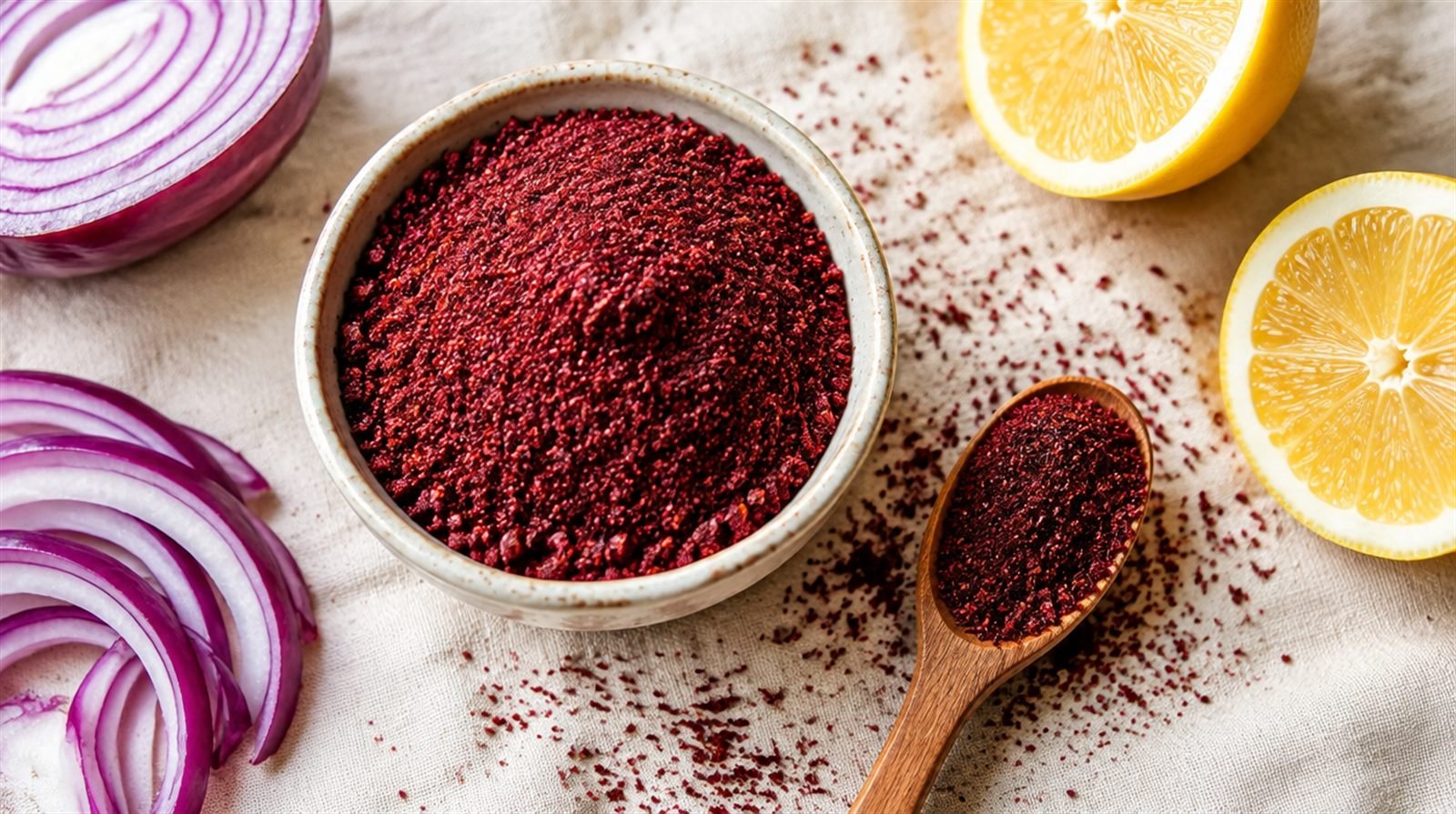
Sumac is a tart, deep red spice made from the dried and ground berries of the sumac bush, which grows across the Middle East and the Mediterranean. So what is sumac used for? Mostly as a sour, lemony finishing spice on salads, grilled meat, onions and rice. It is one of the defining flavors of Levantine and Iraqi cooking.
If you have eaten fattoush or a good chicken shawarma, you have tasted sumac even if you did not know it. It is the tang on the onions, the red dust on the hummus, and the reason the salad tastes bright without much lemon.
Here is what sumac tastes like, where it comes from, and ten ways to cook with it, starting with the easiest.
What does sumac taste like?
Sumac tastes sour and lemony with a slightly fruity, almost cranberry-like finish and very little bitterness. It is not hot. The sourness is softer than lemon juice or vinegar, and it comes without any liquid, which makes it useful on things that would go soggy.
The texture is a coarse, slightly moist powder. Good sumac, like our Kashat Ground Sumac, is a deep wine red. If yours looks brown or dusty pink, it is either old or padded with a lot of salt, and it will taste flat.
What is sumac made from?
Culinary sumac comes from the berries of Rhus coriaria, a shrub native to the Middle East and southern Europe. The berries are harvested, dried, and ground into the coarse red powder sold as sumac spice. Some producers add a little salt to help it keep.
It has a long history in the region as a souring agent, used before lemons were widely available there. That history is why sumac shows up in so many traditional dishes from Iraq, Syria, Lebanon, Turkey and Iran.
How do you use sumac?
Use sumac as a finishing spice, sprinkled on at the end, or as part of a rub or dressing. If you are wondering what is sumac good for, the short answer is almost anything that wants a squeeze of lemon. Heat dulls it a little, so add it late when you can. Here are ten ways to cook with it, from easiest to most involved.
- Fattoush salad. Sumac is the signature flavor of fattoush. Toss it into the dressing with lemon, olive oil and garlic, and dust more over the top. See our Fattoush Salad recipe for the full method.
- Sumac onions. Slice a red onion thin, toss with a teaspoon of sumac, a pinch of salt and a handful of chopped parsley. Let it sit 10 minutes. Serve with any grilled meat.
- Grilled or roasted chicken. Mix sumac with olive oil, garlic, salt and black pepper and rub it over chicken thighs before roasting. The sumac gives a tangy crust.
- Hummus and labneh. A sprinkle of sumac over hummus, labneh or baba ghanoush adds color and cuts the richness.
- Eggs. Dust fried or scrambled eggs with sumac instead of reaching for hot sauce. It works especially well with a little olive oil and fresh thyme.
- Roasted vegetables. Toss cauliflower, potatoes, carrots or eggplant with oil and salt, roast, then finish with sumac while they are still hot.
- Rice and grains. Stir sumac into cooked rice, bulgur or a grain bowl with herbs for a quick pilaf.
- Fish. Sumac on white fish or salmon does what lemon does without adding moisture. Pat the fish dry, rub with oil and sumac, and pan sear or bake.
- Salad dressing. Whisk a teaspoon of sumac into any lemon vinaigrette. It deepens the sourness and adds color.
- Za’atar. Sumac is a core part of za’atar, the thyme and sesame blend. Mix 2 parts dried thyme with 1 part sumac and 1 part toasted sesame seeds, plus a pinch of salt, for a simple homemade version.
How much sumac should you use?
Start with about 1 teaspoon per serving for salads and onions, or 1 tablespoon per pound of meat in a rub. Sumac is gentler than lemon juice, so you can be generous without making a dish sharp. Taste as you go. Because it is a dry souring agent, sumac also lets you cut back on lemon or vinegar in dressings without losing brightness.
If you like the combination of citrus and pepper on chicken or fish but want something ready-mixed, our Lemon Pepper blend works alongside sumac or in its place on a busy night.
Sumac vs lemon vs dried lime: which sour should you use?
Once you know what is sumac and what it tastes like, the next question is when to use it instead of lemon. Sumac is the right choice when you want tang without liquid. Lemon is best when you want sharpness and moisture. Dried lime belongs in long-simmered dishes. The table below sums it up.
| Souring agent | Flavor | Best when |
|---|---|---|
| Sumac | Tart, fruity, dry | You want tang without liquid: salads, rubs, finishing |
| Lemon juice | Sharp, bright, wet | Dressings, marinades, squeezed over at the table |
| Dried lime (loomi) | Sour, earthy, slightly fermented | Long-simmered stews, soups and rice |
| Vinegar | Sharp and acidic | Pickles and some dressings |
Frequently Asked Questions
Is sumac spicy?
No, sumac is not spicy. It is sour and tangy, closer to lemon than to chile, with no heat at all. People sometimes assume it is hot because of its deep red color, but the color comes from the berry itself. If you want heat and tang together, pair sumac with Aleppo pepper or a pinch of cayenne.
Is sumac spice the same as poison sumac?
No, the sumac you cook with comes from a different plant than poison sumac. Culinary sumac is made from the red berries of Rhus coriaria and related edible species. Poison sumac is a separate plant with white berries that grows in wet areas of North America. Sumac sold as a spice is safe to eat and has been used in cooking for a very long time.
What can I substitute for sumac?
The closest substitute for sumac is lemon zest with a pinch of salt, which gives you the citrus tang without extra liquid. A squeeze of lemon juice or a splash of vinegar works in dressings and marinades. Ground dried lime is a good swap in stews. None of these match sumac’s color or its fruity finish, so it is worth keeping a jar on hand.
How should I store sumac?
Store sumac in an airtight jar in a cool, dark cupboard away from the stove. It keeps its color and tang for several months to a year that way. Sumac is slightly moist by nature, so keep the lid tight and use a dry spoon. If it turns brown or smells dull, it has faded and it is time for a fresh jar.
Kashat Ground Sumac is ground fresh in-house in small batches in Madison Heights, Michigan, with no artificial preservatives or additives. Get a jar of Kashat Ground Sumac and start with a bowl of sumac onions tonight. Orders ship in 1 to 3 business days.