Kubba (Kibbeh) 101: What It Is and How to Season It
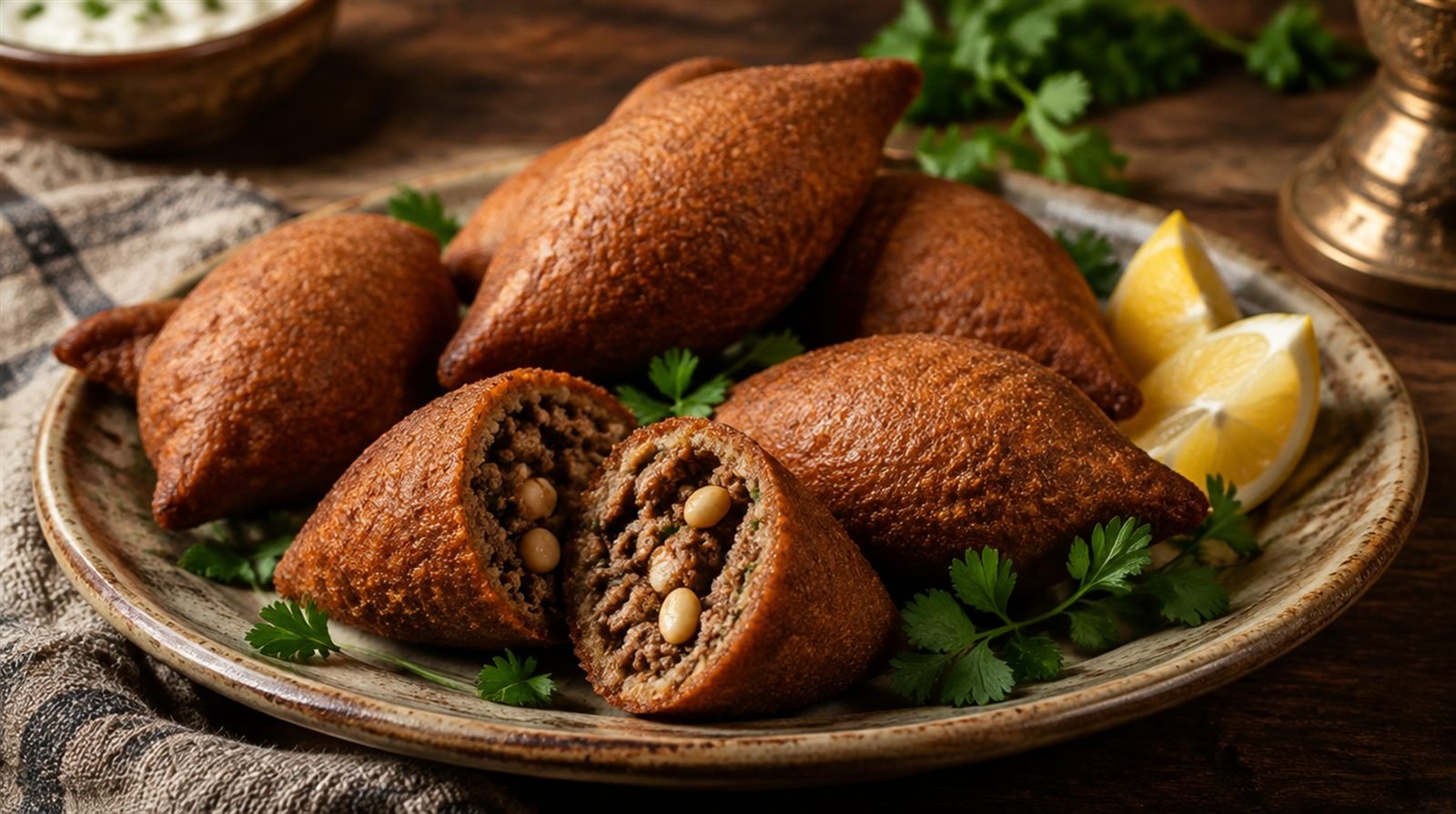
Kubba spice is the warm, savory seasoning that flavors the meat filling inside kubba, also spelled kibbeh, a family of Middle Eastern dumplings made from a bulgur, rice or semolina shell wrapped around spiced ground meat. A typical blend leans on allspice, cinnamon, black pepper and sometimes cardamom, cloves or dried lime, depending on the region.
In our family, kubba is the dish that takes all afternoon and disappears in ten minutes. There are Iraqi versions boiled in sour broth, versions fried until the shell shatters, and versions baked in a tray. All of them depend on getting the seasoning right.
Here is what kubba is, how the main types differ, what goes into the seasoning, and the mistakes that trip people up the first time.
What is kubba?
Kubba is a stuffed dumpling or croquette with an outer shell of grain and an inner filling of spiced ground meat, usually beef or lamb, with onion and often pine nuts or almonds. In the Levant it is spelled kibbeh, in Iraq it is usually kubba, and the Chaldean and Assyrian communities of Iraq have their own versions and spellings.
The shell changes by region and by dish. Levantine kibbeh uses fine bulgur and often pounded meat worked into the shell itself. Iraqi kubba comes in several styles, with rice shells, semolina shells and bulgur shells, some with meat in the shell and some without.
Iraqi kubba varieties
- Kubba halab has a rice shell, shaped into a torpedo and deep fried until golden and crisp. It is the one most people picture.
- Kubba hamudh is boiled in a sour, tomato-based broth flavored with dried lime or lemon, often with turnips or chard. Hamudh means sour.
- Kubba mosul is a wide, flat disc from the city of Mosul, with a thin bulgur and meat shell, poached in broth and sliced like a pie.
- Kubba shwandar is cooked in a beet broth, which stains the broth a deep red.
Levantine kibbeh varieties
- Fried kibbeh is the football-shaped bulgur and meat croquette served as a mezze across Lebanon, Syria and Palestine.
- Kibbeh bil sanieh is baked in a tray in two layers with the filling between them, then cut into diamonds.
- Kibbeh nayyeh is raw, finely pounded meat and bulgur served with olive oil, mint and onion.
What is in kubba spice?
Kubba spice, or kibbeh seasoning, is a warm spice mix that typically includes allspice, cinnamon, black pepper and salt, with cardamom, cloves, nutmeg, cumin or dried lime added in some families. It is close to baharat in spirit but often a little sweeter and softer, since it has to flavor a mild filling without overpowering the shell.
Every family has its own ratio. Ours is a family recipe we have blended for decades and sell as Kashat Kuba blend. What we can share is what each part does.
Allspice
Ground allspice is the heart of kubba filling. It tastes like cinnamon, clove and nutmeg in one, and it gives the meat that unmistakable Middle Eastern warmth.
Cinnamon
Ground cinnamon adds sweetness against the salt and onion. A small amount is enough. If you can taste it clearly, pull back next time.
Black pepper
Pepper keeps the filling savory and stops the warm spices from tasting like dessert.
The optional extras
Cardamom adds fragrance, cloves add sharpness, cumin adds earth, and dried lime adds sourness. Iraqi families lean on dried lime more than Levantine ones do, especially in kubba hamudh, where the broth is sour as well.
How do you season kubba?
Season the filling generously and the shell lightly. The filling is small in volume and carries almost all the flavor, so it needs more spice than you might expect. The shell needs salt and a little spice, but mostly it needs to hold together.
Seasoning the filling
- Cook finely chopped onion in a little oil until soft and golden.
- Add ground beef or lamb and cook, breaking it up, until no pink remains.
- Add 1 to 1.5 teaspoons of kubba spice per pound of meat, plus salt to taste.
- Stir in toasted pine nuts or slivered almonds and a handful of chopped parsley if you like.
- Cool the filling completely before stuffing. Warm filling tears the shell.
Seasoning the shell
For a rice or semolina shell, add salt and a pinch of turmeric or a light dusting of the blend to the cooked grain before you knead it. For a bulgur shell with meat worked in, season it about half as strongly as the filling. Taste the shell dough before shaping if it contains no meat. It should taste seasoned but plain.
Seasoning the broth
For boiled kubba like hamudh, the broth carries flavor too. Season it with salt, dried lime, a little tomato and a pinch of the same warm spices so the shell tastes of the broth as it cooks. Kashat Baharat 7 Spice works well here if you do not have a separate kubba spice on hand.
What are the most common kubba mistakes?
Most kubba problems come from the shell, not the filling. Here are the ones we see most often.
- Underseasoned filling. The filling should taste a little too strong on its own, because the shell dilutes it.
- Warm filling. Stuff with cold filling, or the fat melts and the shell splits.
- Shell too wet or too dry. Wet shells fall apart in oil or broth. Dry shells crack when you shape them. Keep a bowl of water nearby and wet your hands as you work.
- Oil not hot enough. For fried kubba, the oil should be around 350°F so the shell seals fast. Cool oil makes greasy, broken kubba.
- Crowding the pot. Boiled kubba need room. Cook in batches and keep the broth at a gentle simmer, not a rolling boil.
Frequently Asked Questions
What is the difference between kubba and kibbeh?
Kubba and kibbeh are the same family of dish with different regional spellings. Kibbeh is the Levantine spelling used in Lebanon, Syria and Palestine, where the shell is usually bulgur and often contains meat. Kubba is the Iraqi spelling, and Iraqi versions include rice shells, semolina shells and boiled kubba in sour broth. The seasoning is similar in both, built on allspice, cinnamon and pepper.
Can I use baharat instead of kubba spice?
Yes, baharat is a good stand-in for kubba spice, since both are built on allspice, cinnamon, black pepper and warm spices. Baharat is usually a little more peppery and less sweet, so use the same amount and taste the filling before you stuff. A dedicated kubba blend is tuned for the filling, but baharat will get you a very good result on a night you do not have it.
What meat is best for kubba filling?
Ground beef with a moderate amount of fat is the most common choice, and ground lamb is the traditional favorite in many Iraqi and Levantine homes. Very lean meat makes a dry, crumbly filling, so avoid extra-lean. Some families mix beef and lamb. Whatever you use, chop the onion fine and cook it until soft first, since the onion is as important to the filling as the meat.
Can you freeze kubba?
Yes, kubba freezes very well before cooking, which is why many families make a large batch at once. Shape the kubba, lay them on a tray so they do not touch, freeze until firm, then move them to a bag. Fry or boil straight from frozen, adding a few extra minutes. Cooked fried kubba can also be frozen and reheated in the oven, though the shell will be less crisp.
Kashat Kuba blend is our family’s kubba spice, ground fresh and hand-mixed in small batches in Madison Heights, Michigan, with no artificial preservatives or additives. Get a jar of Kashat Kuba blend and make a double batch for the freezer. Orders ship in 1 to 3 business days.