Sumac Substitutes and 9 Middle Eastern Spice Swaps That Work
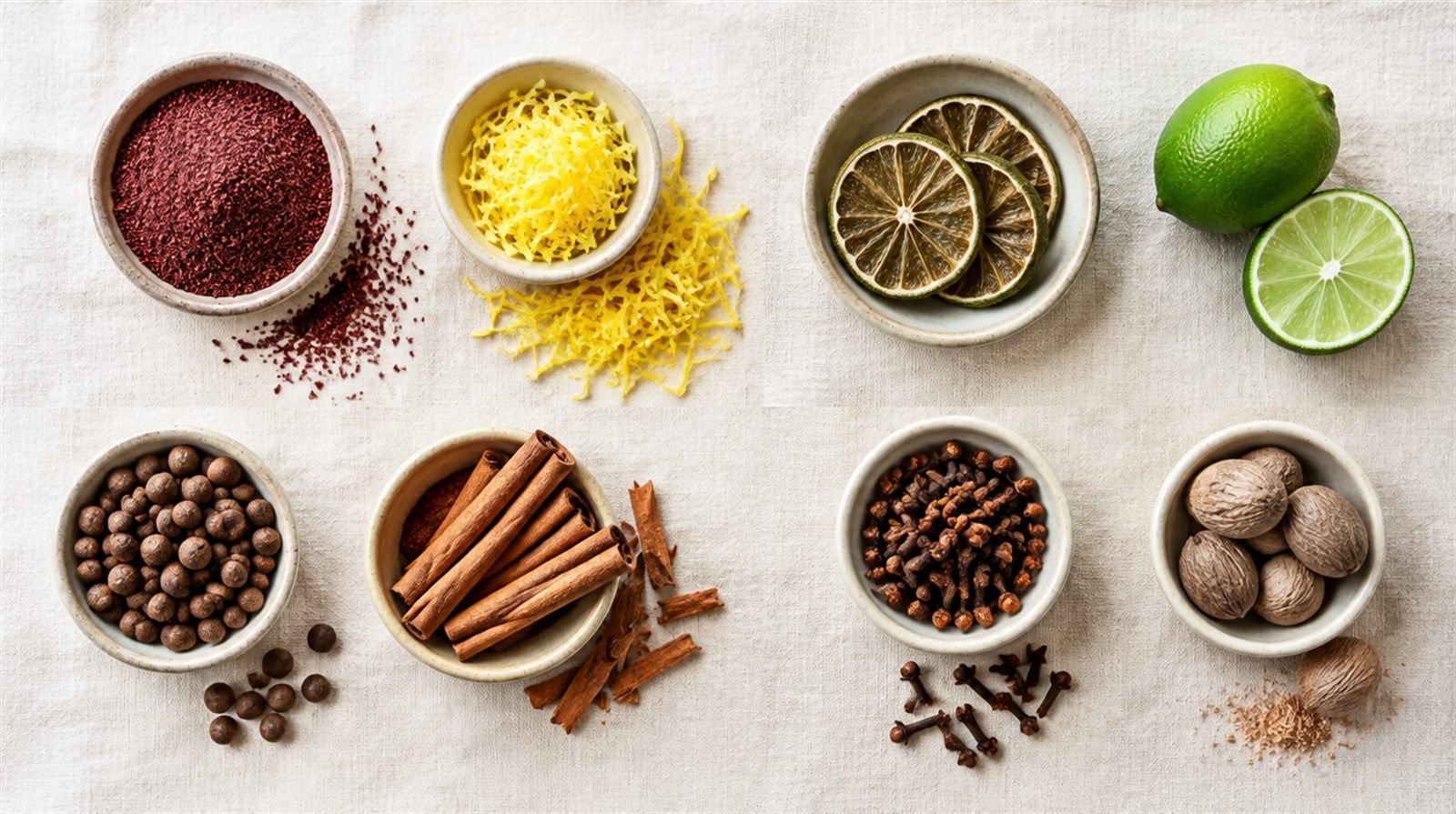
The best sumac substitute is lemon zest with a pinch of salt, used in the same amount the recipe calls for, because it gives the same tart, bright lift without adding liquid. Sumac has a fruity sourness and a deep red color that zest cannot copy, so keep the real thing around if you cook Middle Eastern food often.
Below is the sumac swap in detail, then nine more swaps for baharat, dried lime, cardamom, allspice, nigella, Aleppo pepper, za’atar, dried mint and seven spice, with a summary table.
What is the best sumac substitute?
Lemon zest plus salt is the closest sumac substitute, at a one-to-one ratio: for 1 teaspoon of sumac, use 1 teaspoon of finely grated zest and a small pinch of salt. Sumac is made from dried, ground berries that taste tart and lemony, and zest hits the same bright note. Read our guide to what sumac is and how to use it if you are new to it.
Lemon juice gives the sourness but adds liquid, so it suits dressings and marinades better than a dry rub. Amchur (dried green mango powder) is sour and dry and swaps one-to-one. Tamarind paste is sour but sweeter, so use half as much.
What you lose with any of these is the color and the fruity depth. Kashat Ground Sumac is the crimson dusting you see on fattoush and grilled onions, and there is no substitute for that look.
When a sumac substitute will not work
Skip the swap when sumac is the star rather than a background note. Sumac onions, fattoush and za’atar depend on its color and texture as much as its taste. For those, order the real spice.
What are 9 more Middle Eastern spice swaps that work?
Each swap below gives the closest match, the ratio, and what changes. Ratios are for ground spices unless noted.
Baharat substitute
The closest baharat substitute is allspice, black pepper and cinnamon. For 1 teaspoon of baharat, use 1/2 teaspoon allspice, 1/4 teaspoon black pepper and 1/4 teaspoon cinnamon. Garam masala also works at three-quarters of the amount, though it leans toward cumin and cardamom. You lose the coriander and nutmeg roundness that makes Kashat Baharat 7 Spice taste finished. Our baharat guide explains what typically goes into the blend.
Dried lime substitute
For 1 teaspoon of ground dried lime, use the zest of half a lemon plus 1/2 teaspoon lime juice. For a whole dried lime in a stew, add the zest and juice of half a lime near the end of cooking. You lose the earthy, slightly fermented depth that makes dried lime taste like Iraqi cooking. Kashat Lemon Balls are ground dried limes ready to spoon in, and our dried lime guide covers how to use them.
Cardamom substitute
Use equal parts ground cinnamon and ground nutmeg at the same total amount: for 1 teaspoon cardamom, use 1/2 teaspoon cinnamon and 1/2 teaspoon nutmeg. This gives warmth but not the floral, almost citrusy lift of real cardamom. In tea, coffee and kleicha there is no true replacement, so keep Kashat Cardamom Ground stocked.
Allspice substitute
Allspice tastes like cinnamon, cloves and nutmeg together, so mix those three. For 1 teaspoon allspice, use 1/2 teaspoon cinnamon, 1/4 teaspoon cloves and 1/4 teaspoon nutmeg. The mix is sweeter and less peppery than Kashat Allspice Ground, so in kofta and kubba fillings add a pinch of black pepper.
Nigella substitute
Black sesame seeds are the closest nigella substitute for looks and crunch on bread, one-to-one. For flavor, use half cumin seed and half sesame. You lose the slightly bitter, oniony edge that nigella gives samoon bread and pickles.
Aleppo pepper substitute
For 1 teaspoon Aleppo pepper, use 3/4 teaspoon sweet paprika and 1/4 teaspoon crushed red pepper flakes. Aleppo pepper is mild, fruity and slightly oily, and the mix is drier and sharper.
Za’atar substitute
For 1 tablespoon of za’atar, use 2 teaspoons dried thyme (or half thyme, half oregano), 1 teaspoon toasted sesame seeds and 1/2 teaspoon sumac, with a pinch of salt. If you have no sumac, use the lemon zest swap above. You lose the wild hyssop note of the true za’atar herb, but the mix is close enough for bread and roasted vegetables.
Dried mint substitute
Fresh mint is the best swap for dried mint, at three times the amount: 1 tablespoon chopped fresh for 1 teaspoon dried. Without fresh mint, dried marjoram or basil at one-to-one gives an herbal note without the cooling flavor. Avoid mint extract, which tastes like candy.
Seven spice substitute
Seven spice is another name for baharat, especially the Lebanese version, so Baharat 7 Spice swaps one-to-one. If you have neither, use the baharat mix above and add a small pinch of cloves. Every family’s seven differ a little, so any of these lands close.
Which Middle Eastern spice swap should you use?
Ratios read as substitute per 1 teaspoon of the original unless the row says otherwise.
| Spice | Closest swap | Ratio | What you lose |
|---|---|---|---|
| Sumac | Lemon zest plus a pinch of salt | 1:1 | Red color, fruity depth |
| Baharat | Allspice, black pepper, cinnamon | 1/2 + 1/4 + 1/4 tsp | Coriander and nutmeg roundness |
| Dried lime | Lemon zest plus lime juice | Zest of 1/2 lemon + 1/2 tsp juice | Earthy, fermented depth |
| Cardamom | Cinnamon plus nutmeg | 1/2 + 1/2 tsp | Floral, citrusy lift |
| Allspice | Cinnamon, cloves, nutmeg | 1/2 + 1/4 + 1/4 tsp | Peppery edge |
| Nigella | Black sesame seeds | 1:1 | Bitter, oniony note |
| Aleppo pepper | Sweet paprika plus red pepper flakes | 3/4 + 1/4 tsp | Fruity, oily mildness |
| Za’atar | Thyme, sesame, sumac | 2 tsp + 1 tsp + 1/2 tsp per 1 tbsp | Wild hyssop flavor |
| Dried mint | Fresh mint | 3:1 fresh to dried | Concentrated savory note |
| Seven spice | Baharat 7 Spice | 1:1 | Very little |
How do you adjust a recipe when you substitute a spice?
Start with about three-quarters of the amount the recipe calls for, taste, then add. Substitutes often land stronger or sweeter than the original, and it is easy to add but impossible to take out.
Watch salt and liquid too. Lemon juice and tamarind add moisture, so pull back a spoon of other liquid in marinades. And if you reach for a sumac substitute more than once, the real spice lasts a long time when stored well.
Frequently Asked Questions
Can I use lemon juice instead of sumac?
Yes, lemon juice works as a sumac substitute in dressings, marinades and sauces, where extra liquid is not a problem. Use about 1 teaspoon of juice for 1 teaspoon of sumac, and add a small pinch of salt. It does not work as a dry sprinkle on onions, hummus or grilled meat, because it soaks in and disappears. For those, lemon zest is the better swap.
Is sumac the same as za’atar?
No, sumac is a single spice and za’atar is a blend that contains it. Sumac is the ground dried berry of the sumac bush, tart and red. Za’atar is a mix of a wild thyme-like herb, sesame seeds, sumac and salt, eaten with olive oil on bread. You can make a rough za’atar from thyme, sesame and sumac, but you cannot make sumac from za’atar.
What can I use instead of baharat in kofta?
Use allspice, black pepper and cinnamon in a 2:1:1 ratio, which covers the warm, peppery base of most kofta seasoning. Add a pinch of ground coriander or cumin if you have it, since baharat usually includes both. Garam masala also works at three-quarters of the amount, but it will taste a little more Indian than Iraqi. Keep the onion and parsley the same.
Can I substitute lemon for dried lime in a stew?
Yes, add the zest and juice of half a lemon or lime in the last ten minutes of cooking for each dried lime the recipe calls for. Add it late, because fresh citrus turns bitter and dull if it simmers for an hour. You will get the sourness but not the earthy, fermented depth, so many cooks also add a pinch of black pepper to fill the gap.
Shop Kashat Ground Sumac and Lemon Balls and you will not need to substitute either one again. Orders ship in 1 to 3 business days.